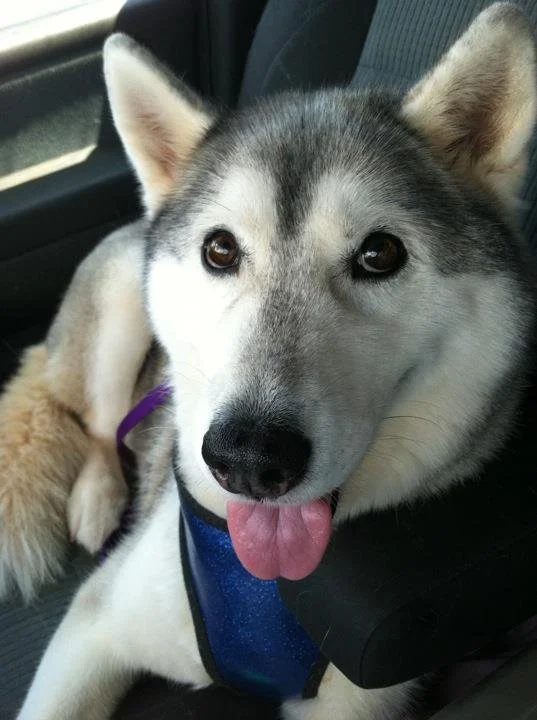
In 2011 I fostered a Siberian Husky named Emma Grace for MUSH Rescue in Alpharetta.
I had only just begun fostering dogs the year before, and I didn't know much about canine body language — and nothing about dog photography. Emma spent the first month as our foster dog living under our bed. She was terrified of people. We had to slide her food bowl under the bed and leave the house for her to eat.
Eventually, Emma came to trust us. She'd sit on the couch with us. She played in the yard with the other dogs. She got adopted — and I got a genuinely sweet phone photo of her in the car after she met her forever family for the first time.
But I've always wondered: if I had understood what Emma was communicating, could I have helped her feel safe faster?
That question is what started everything.
How I Learned to Listen
After Emma was adopted, I enrolled in Canine Nose Work with Canine Country Academy in Lawrenceville. I picked it because it sounded interesting. What I got was something I didn't expect: an education in observation.
Nose work is entirely dog-led. Your job as the handler is to watch your dog — to learn their specific "tells" when they've found a scent, when they're sourcing, when they're saying it's right here, why can't you smell it? It's genuinely fascinating, and it taught me to watch dogs in a completely different way.
I fell in love with understanding what my dog was saying. And I wanted to know more.
From there: books, seminars at UGA, webinars with trainers like Suzanne Clothier, speakers at Canine Country Academy, developing a close friendship with Paula the owner & head trainer at CCA. If you want to go deeper yourself, these are the books that changed how I see dogs:
On Talking Terms with Dogs: Calming Signals — Turid Rugaas
Bones Would Rain from the Sky: Deepening Our Relationships with Dogs — Suzanne Clothier
What It Changed
Learning to read canine body language has done more than make me a better foster mom and dog mom.
During a session, when I notice a dog offering lip licks and look-aways, I understand she's telling me she's a little nervous — and I can do something about it before she shuts down entirely. We might take a break, play a treat toss game, or I'll give her more space with a longer lens. When I see soft eyes and a wiggly body, I know she's inviting play. We start a game of fetch. I photograph the fetch.
A dog who is heard is a dog who cooperates — not because I've trained them to, but because the session actually feels okay to them. When we can speak the same language, the entire experience is easier for everyone. Human and canine alike.
The practical result: sessions that produce genuine expressions because the dogs in them are actually comfortable. Not performing, not tolerating — actually relaxed and themselves.
What to Look For in a Pet Photographer
When you're choosing someone to photograph your dog, add this to your list of questions: what do you know about canine body language, and how does it shape how you work?
A photographer who can answer that specifically — not generically — is a photographer who is going to pay attention to what your dog is telling them throughout the session. That attention is what stands between a session that feels stressful for your dog and one that doesn't.
You deserve a photographer who speaks your dog's language. Your dog deserves it even more.
→ Read next: