
How to Hang Wall Art Like a Pro — Dog Portraits & Photographs

You've done the hard part. You've had the session, you've chosen the images, you know which face you want to see every morning when you walk past.
Now you're standing in your living room with a hammer and three different opinions about where to put the nail.
Here's what you actually need to know — three guidelines that make every wall art decision straightforward.

You know you want to see that favorite furry face on your wall everyday, but…
The Only Rule
Before the guidelines: the only real rule is that it makes you happy.
Everything below is a framework, not a mandate. These are the guidelines that work in most rooms for most people — and if something else looks right to you, trust that. You're not hanging the Mona Lisa. You're hanging a portrait of your dog.
Guideline 1: 60% — Size Relative to Your Furniture
The single most common mistake I see: ordering too small.
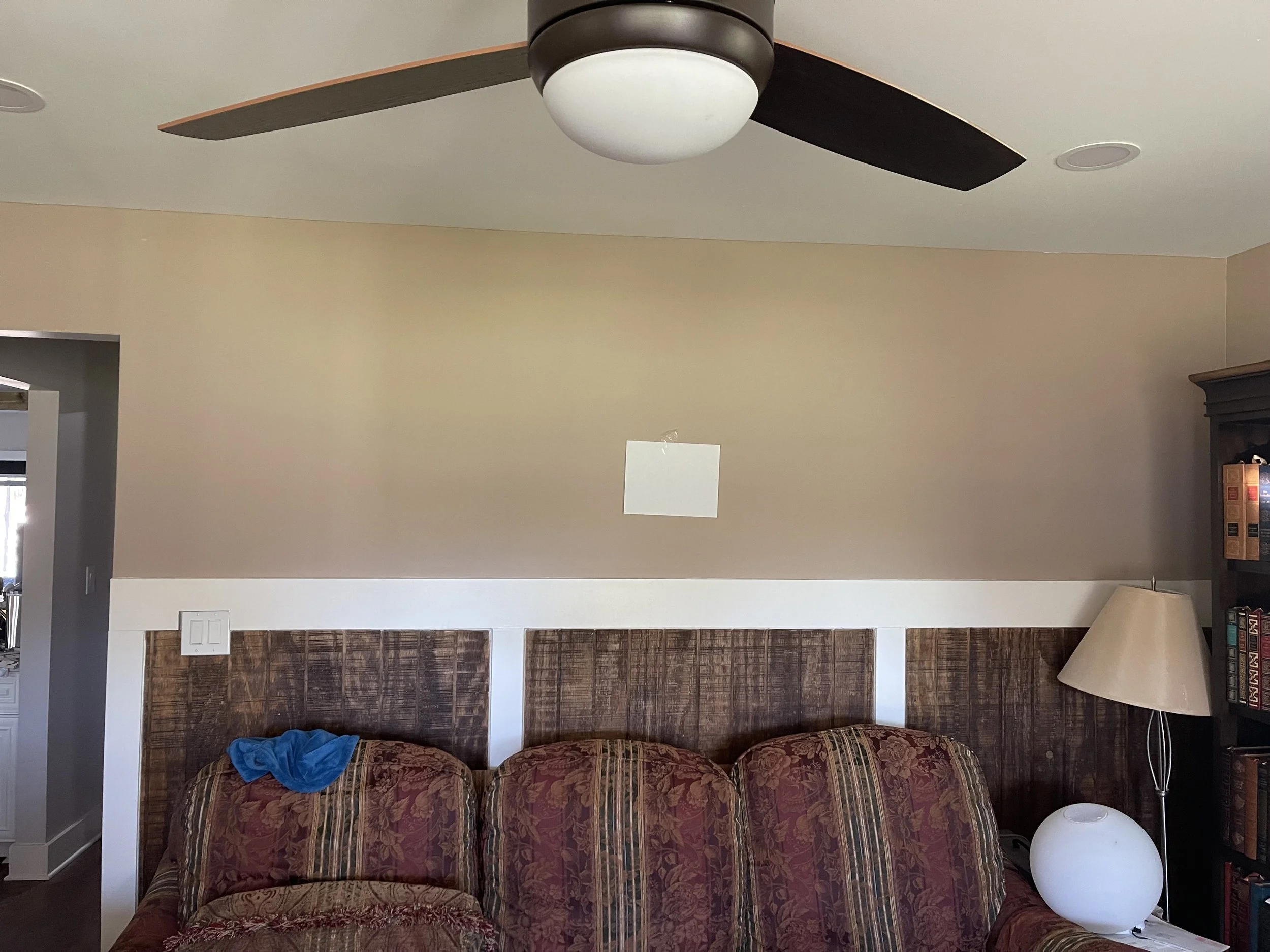
An 8x10 sounds large, especially if you're used to 4x6 prints. But tape a piece of printer paper to your wall and stand back. It looks tiny. Now tape up four sheets in a 2x2 arrangement. That's closer to what a 16x20 actually looks like — and even that reads as small on most walls.
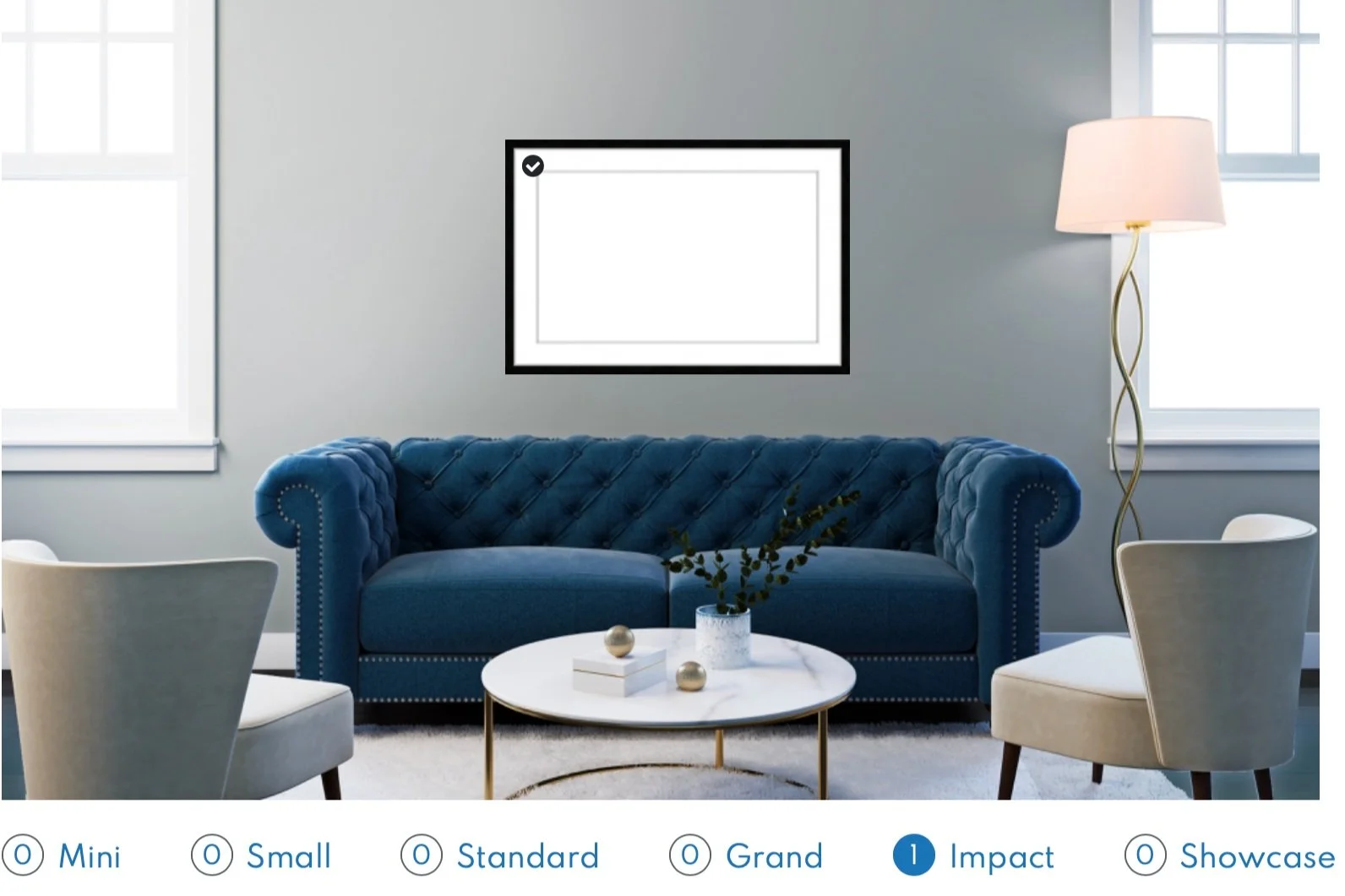
The guideline: your wall art should be approximately 60% of the width of the furniture it hangs over. For a standard 70-inch sofa, that's about 42 inches wide — which is why an Impact size of 30x40 print is my most-recommended piece for above a couch. It sounds large until it's up there. Then it looks exactly right.
If you're hanging over a fireplace or in a space without furniture below, aim for 60% of the available wall width.
For gallery walls: the 60% rule applies to the outer dimensions of the entire arrangement, not to individual pieces.
Guideline 2: 60 Inches — Height From the Floor
This is the one almost everyone gets wrong — including me, as I sit writing this and look at the portraits on my own wall that are hanging slightly too high.
The center of your artwork — or the focal point of a gallery arrangement — should sit approximately 60 inches from the floor. That's average eye level for most adults, and it means the image meets you where you naturally look rather than making you crane your neck upward.
If you've already hung something and it looks a little off but you can't explain why, check the height first. Moving art down is usually the fix.
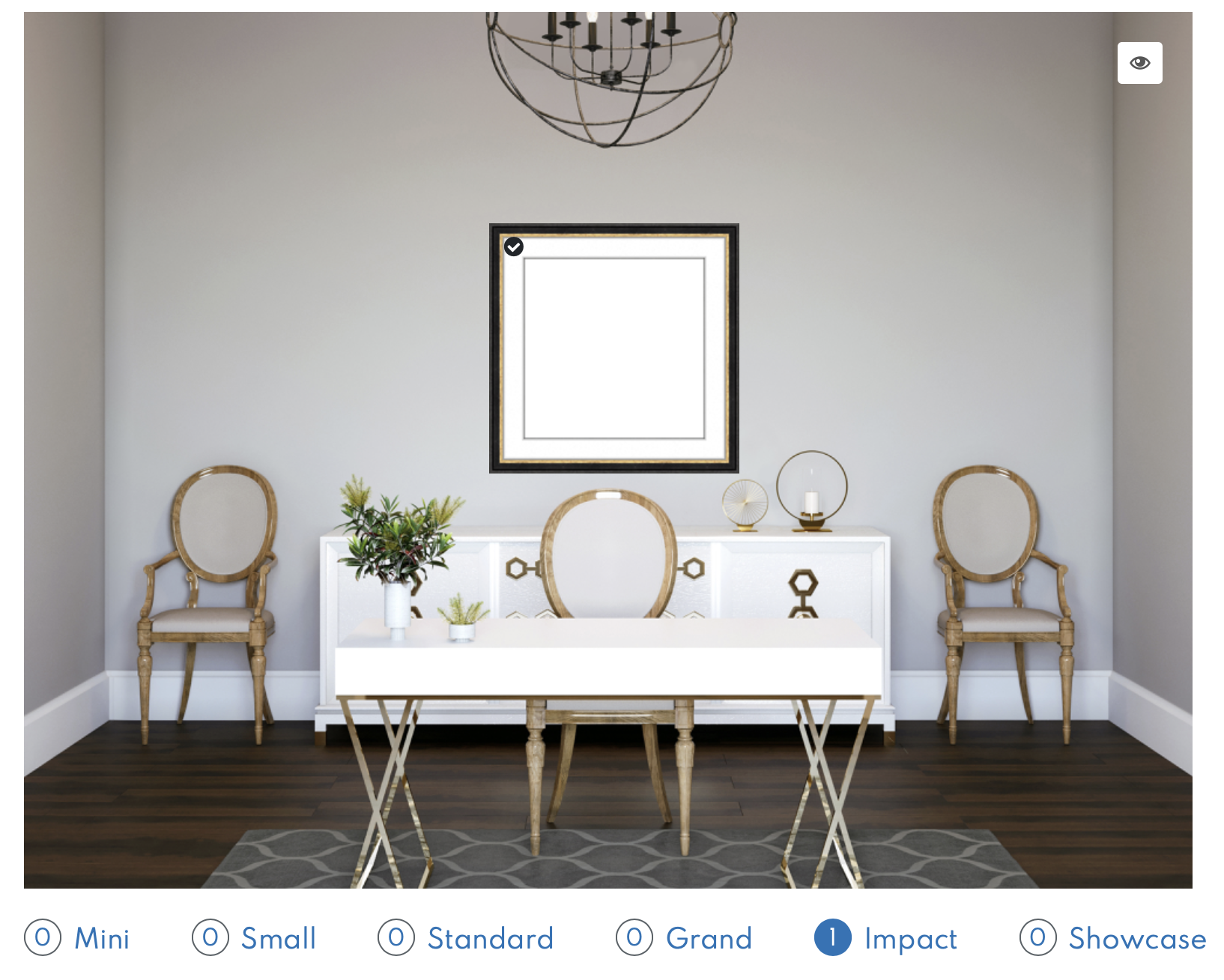
Guideline 3: 6 Inches — Distance Above the Furniture
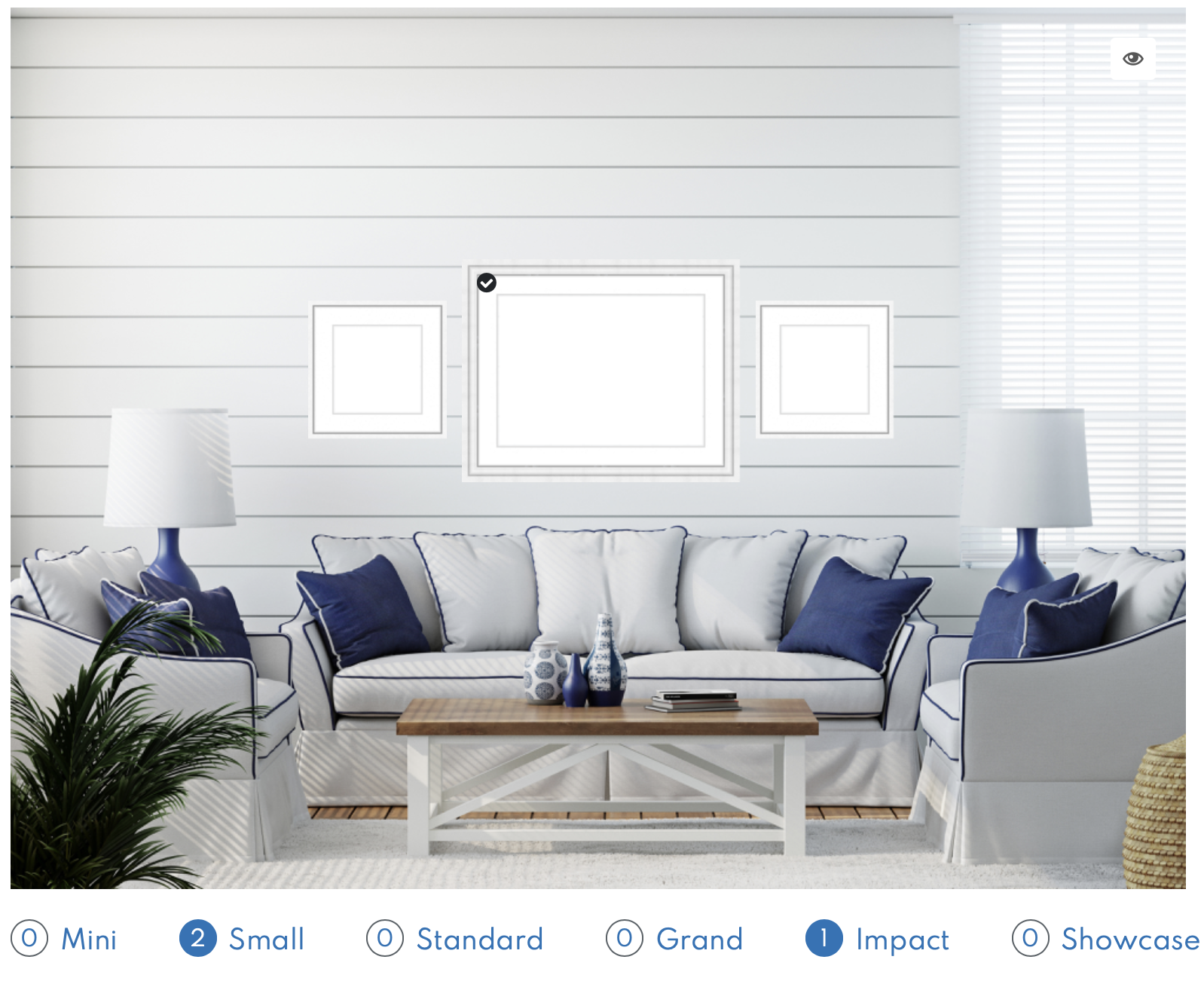
If you're hanging over a sofa, console table, or bed, the bottom edge of the frame should be about 6 inches above the back of the furniture — 8 inches at the absolute maximum.
Less than 6 inches looks like the art and furniture are colliding. More than 8 and the art starts to look like it’s floating.
The easy way to remember all three: the rule of 60s and 6.
For Gallery Walls: One More Thing
When you're arranging multiple pieces, lay the whole arrangement on the floor first. Shift things around until the composition feels right before you commit to a single nail hole. It takes ten minutes and saves significant frustration.
Leave 2-4 inches between frames. The space between pieces is as much a design element as the pieces themselves — too tight looks crowded, too wide looks like the pieces aren't related.
→ Read next: