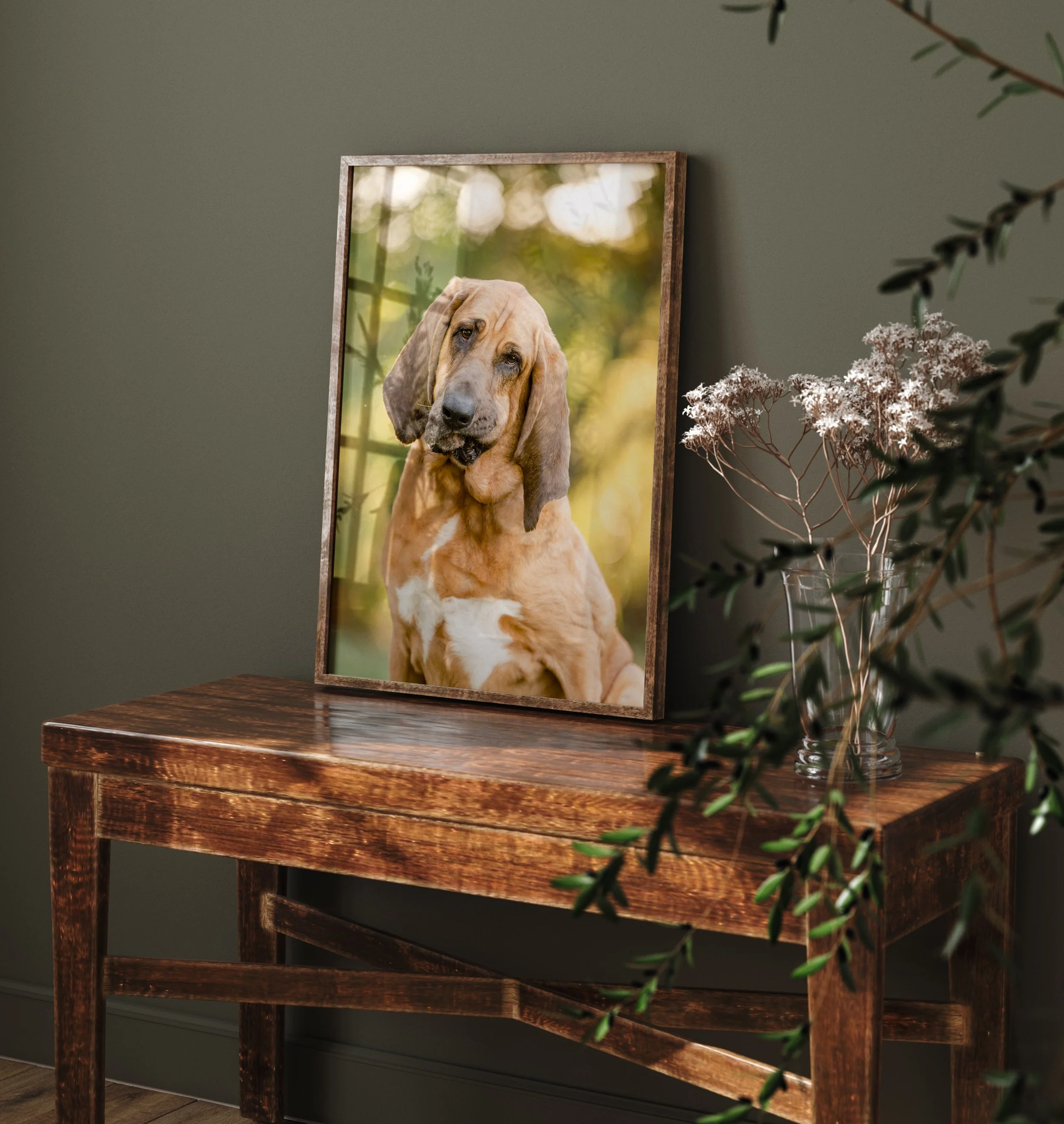
The first rule of dog photography is to get one incredible photos of the dog looking at the camera.
Simple to say. Not always simple to do.
Every dog is different, and the tricks that work for one can completely fail on another. After photographing hundreds of dogs, I've found that most fall into one of three types — and each type needs a different approach.
The Three Types
The Unicorn. Looks at the camera like it owes them money. Natural model. Makes the photographer look much better than she is. I meet this dog maybe once a year.
The Squirrel Patrol. The world is full of fascinating things and none of them are the camera. Chipmunks, butterflies, that one leaf, the person walking their dog 200 yards away — all of it is infinitely more interesting than me.
The Nervous Nellie. A stranger pointing a large mechanical eyeball in their direction is not exactly comforting. These dogs need a different kind of coaxing.
The Squirrel Patrol and the Nervous Nellie make up about 95% of the dogs I photograph. Here's what actually works on each of them.
Tricks for the Squirrel Patrol
Unique noises. I am an introvert. I am also, during sessions, a person who rolls around on the ground making sounds that defy description — squeaking, whistling, meowing, turkey warbling, distressed rabbit calling. Most dogs have never heard a turkey call before, and few can resist a quick glance to see what on earth is happening behind the camera.
A quick clicker training session. Do you know what a camera shutter sounds like? A lot like a training clicker. I can usually teach a dog in just a few repetitions that looking at the camera pays — treat right at the lens, click, treat. Pretty soon they're watching that lens like it's the source of all good things.
Cat wand toys. I keep feather wands in my bag at all times. Flicking one over my head and dropping it behind the camera gets a lot of dogs to track the "bird" directly into a perfect camera-look. It's ridiculous and it works beautifully.
Tricks for the Nervous Nellie
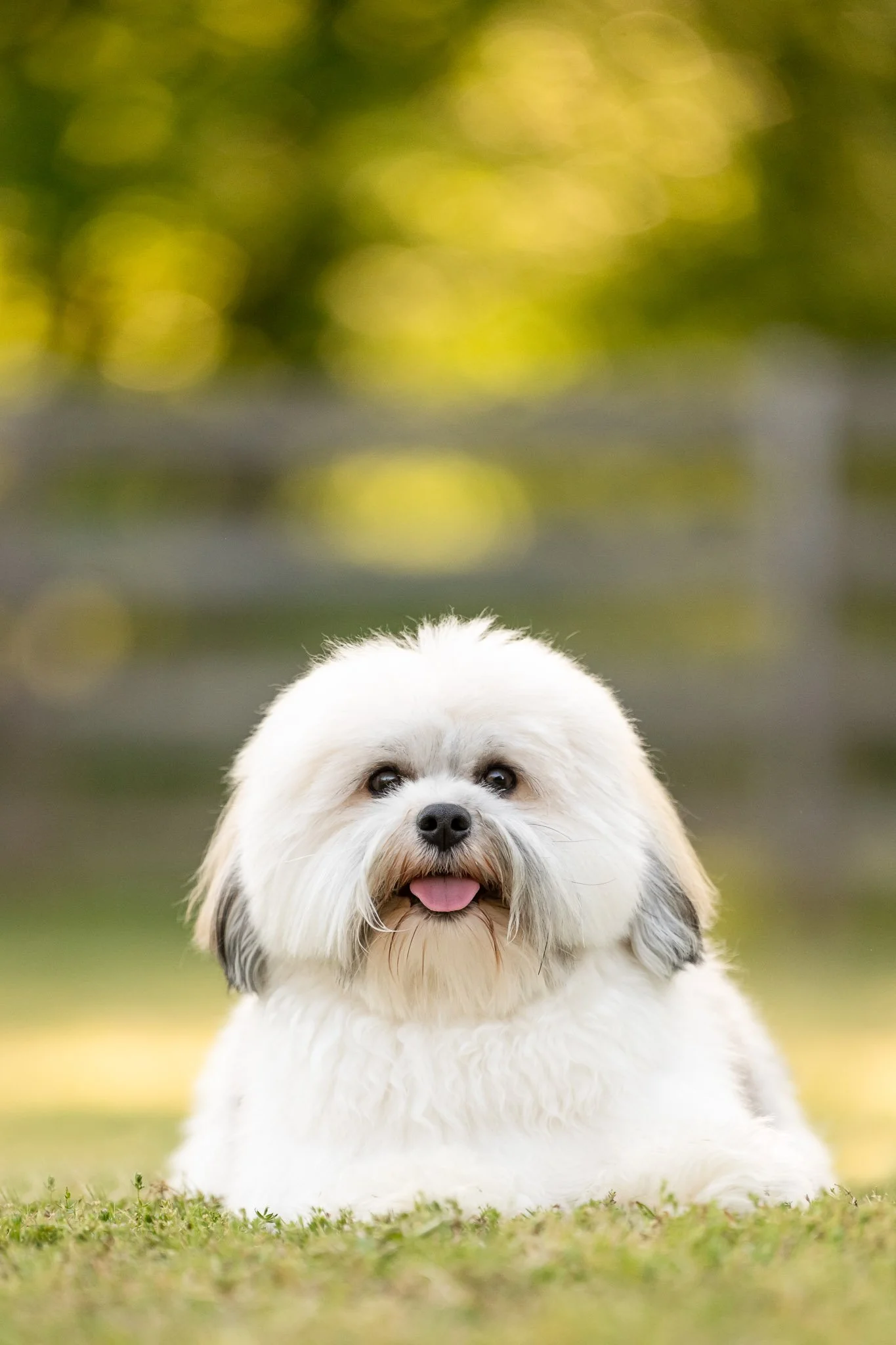
Pregame time. If you mention that your dog tends to be anxious, I'll plan to "start" our session 15 minutes early. We won't actually photograph until the light is ready, but your dog gets 15 minutes to sniff me, sniff my gear, eat treats with zero pressure, and decide that I'm probably okay. Fifteen minutes of this can completely change a session.
Give space. Me and my camera might be terrifying at five feet. At 25 feet? Suddenly I'm something mildly interesting. I almost always open sessions with a telephoto lens — my 70-200mm f/2.8 — which lets me make beautiful images, including close-ups, from a distance that doesn't feel invasive. Even confident dogs get this treatment at the start; it gives everyone time to settle.
Get stinky. Super-stinky, high-value treats — tuna, peanut butter, hot dogs, liverwurst — do things that dry biscuits cannot. A dog's nose is roughly 40,000 times more sensitive than ours. Point the nose toward the camera, and the eyes follow.
The Number One Trick
Patience.
Every dog, given enough time and positive association, will look at the camera eventually. My job is to create the conditions where that happens as often as possible — and to be ready when it does.
→ Read next: