What to Wear for Your Equine Photo Session

Let me start by being honest about what my barn clothes actually look like.
Most days: a very messy bun, jeans that are more stained than denim at this point, and whatever ratty t-shirt I can afford to have slimed with apple juice before the morning chores are done. I will have hay in my hair before 8 am. This is fine. This is barn life.
Your equine photo session is not barn life. It's the exception — the intentional, beautiful version of the hours you spend with your horse every week. Here's how to dress for it.
Start with the Session Type
The first question isn't "what color should I wear?" It's "will I be mounted, unmounted, or both?"
This changes everything about your outfit choices, so decide this first and let it drive the rest.
If You're Riding
Your riding discipline sets the visual language of the session.
Hunt seat and dressage riders already have a built-in aesthetic that photographs beautifully — breeches, tall boots, a well-fitted coat or show jacket. You don't have to overthink it. Classic show attire in neutral or muted tones (navy, charcoal, hunter green, cream) is timeless and lets the horse and your partnership be the visual subject rather than what you're wearing. A white or pale show shirt under a darker coat is a classic combination that always works.
Western riders have more flexibility — and more opportunity for personality. A well-fitted western shirt, clean dark jeans or riding pants, and great boots photograph beautifully. This is a good excuse to wear the piece you love but save for special occasions. Bold embroidery, a striking belt buckle, a hat that's actually yours — these add character without competing with your horse.
Trail and casual riders — same principles as western, but lean into what feels authentic to how you actually ride. If you're a boots-and-flannel person, be a boots-and-flannel person. Authenticity reads in photographs in a way that "dressed up for the occasion" doesn't always.
For all mounted sessions: tall boots always photograph better than paddock boots and half chaps. If you have them, wear them.
If You're Not Riding (Groundwork, Leading, Liberty)
Unmounted portraits are some of my favorites — the connection between horse and handler without the formality of the saddle is genuinely moving to photograph.
For these portraits, think of it the same way you would a dog session: textures, movement, tonal consistency. Linen, denim, knit, suede all contrast beautifully against a horse's coat. Layers add visual interest and let you create variety within the session — a vest, a jacket, a scarf that can come off for a different look mid-session.

Color considerations: Think about your horse's coat color when choosing your outfit. Contrast creates visual separation — you want to be distinguishable from your horse, not blending into them. A dark outfit against a grey or palomino reads beautifully. Earth tones against a chestnut need a bit more thought. When in doubt, I can advise before your session if you tell me your horse's color and send me a few outfit options.
Footwear: Wear actual boots. This is a barn session — paddock boots, field boots, western boots, even a great pair of tall rubber boots — anything that keeps you safe on uneven ground and looks intentional. No sneakers, no flip-flops.
Doing Both? Plan an Outfit Change
If you want mounted and unmounted portraits in the same session — and most equine clients do — it's completely fine to plan two separate looks.
Here's how we typically structure it: we start with black or white background portraits in the barn aisle, then move to unmounted groundwork and handler portraits, and finish with the mounted work. That order matters for one very practical reason — it keeps your helmet from ruining your hair before we get to the portraits where your hair is visible.
Think of your two outfits as complementary rather than matching. They don't need to be identical, but they should share the same color palette and tonality so your final gallery feels cohesive. A neutral linen shirt for groundwork and a fitted show coat in a similar tone for riding, for example, reads as intentional rather than mismatched.
Practical Barn Realities
A few things worth planning for that don't come up in non-equine photography guides:
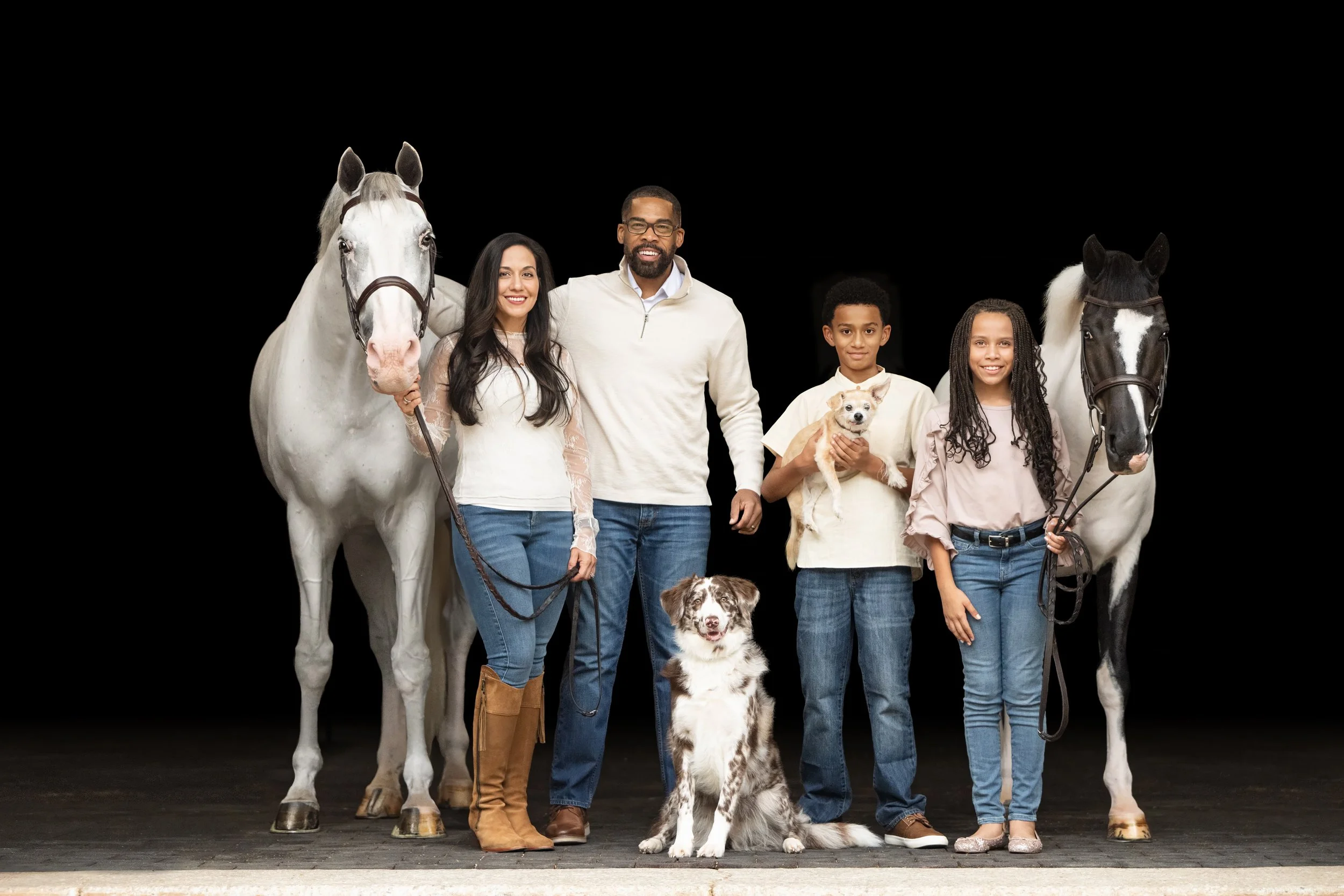
Light colors near horses are brave choices. Cream, ivory, and white photograph beautifully — and will be dirty within five minutes of arriving at the barn. Wear these if you love them, but arrive having put them on immediately before the session, not after chores.
Layers let us create variety. A session that starts with a jacket and ends with just a shirt reads as two different looks in your final gallery. Plan at least one layer you can add or remove.
Hair up or down? For mounted sessions, whatever you'd normally wear under your helmet. For unmounted, down with movement and texture almost always photographs better than pulled back — but wear what feels like you.
Jewelry: Subtle and meaningful over statement pieces. A necklace you always wear, earrings that suit the setting. You're at a barn with a horse — let the visual drama come from them.
Dress for Your Walls, Not Just Your Session
This is the advice almost no one gives — and it's the one that makes the biggest difference in whether your finished portraits feel like art in your home or just nice photos for socials.
Before you finalize your outfit, walk through your house and look at where these portraits are going to live. What are the dominant colors on your walls? What tones run through your furniture, your rugs, your overall aesthetic? Warm and neutral? Cool and modern? Rich jewel tones?
Your outfit should feel like it belongs in that space.
If your home is all warm whites and natural wood and you show up in a bright pink riding jacket, the portrait will feel slightly off every time you look at it — even if you can't immediately name why. But if you choose tones that already exist in your home, the finished piece hangs like it was always meant to be there. It looks less like a photograph and more like art.
I'll always ask about your home decor before your session. If you're unsure what will work, send me a photo of the room where you're imagining the portrait and I'll help you choose.
The Most Important Thing
Wear something you feel genuinely good in — not just appropriate for, but actually good in. Confidence reads in photographs before anything else does. And the hours you spend with your horse deserve to be represented by a version of you that feels like yourself at your best.
That's the person your horse already knows. That's who I want to photograph.
→ Read next: