Why January & February Are Some of the Most Beautiful Months to Photograph Your Dog
Hear me out.
Before you write off January and February as dreary or blah — do a quick test.
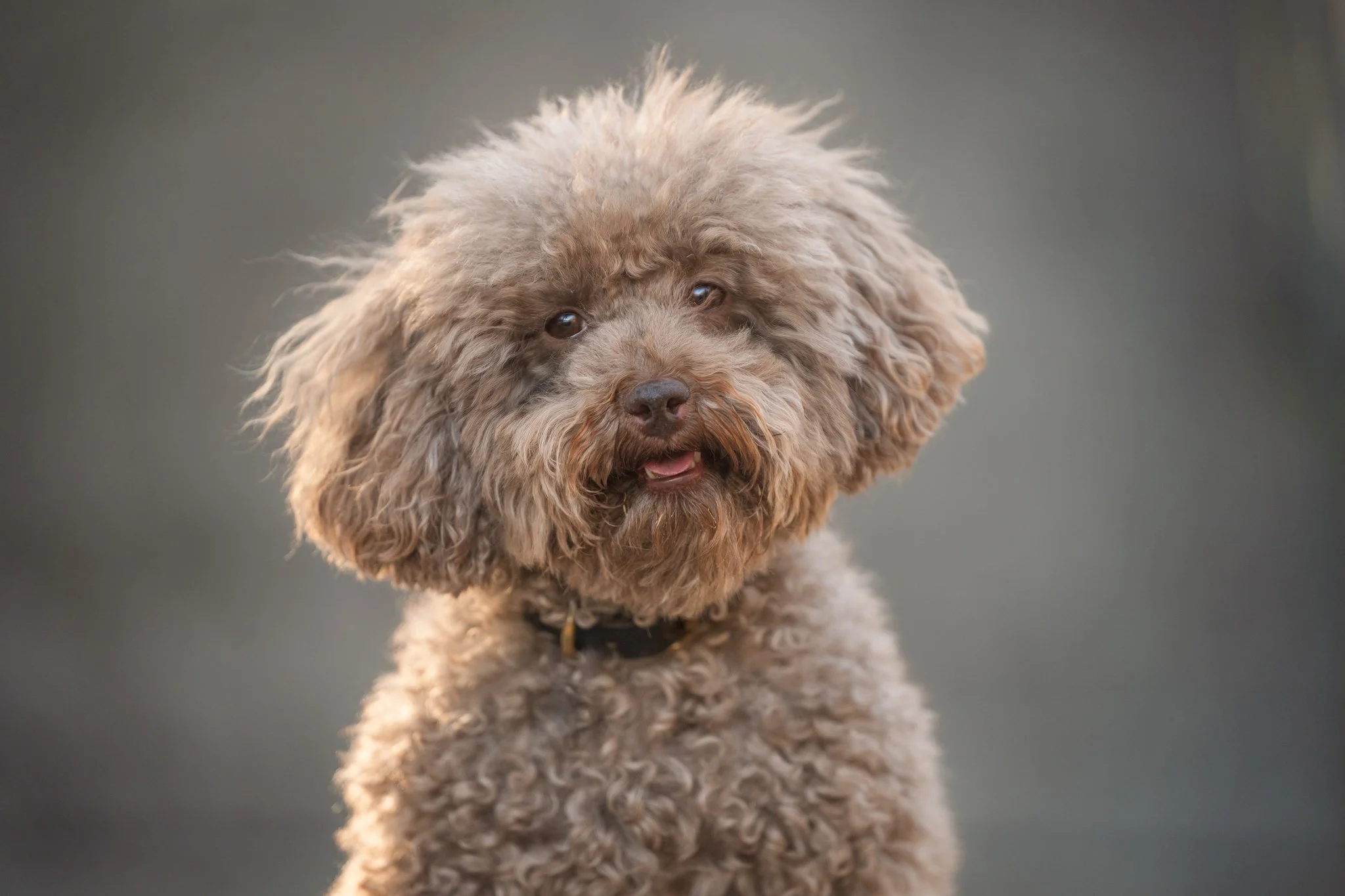
Look at your dog's coat. Right now.
What colors do you see? Warm browns. Soft reds. Golden tans. Chocolate, fawn, sable, cinnamon, caramel, cream.
Now look outside at a Southern winter at sunset. What do you see?
The exact same palette.
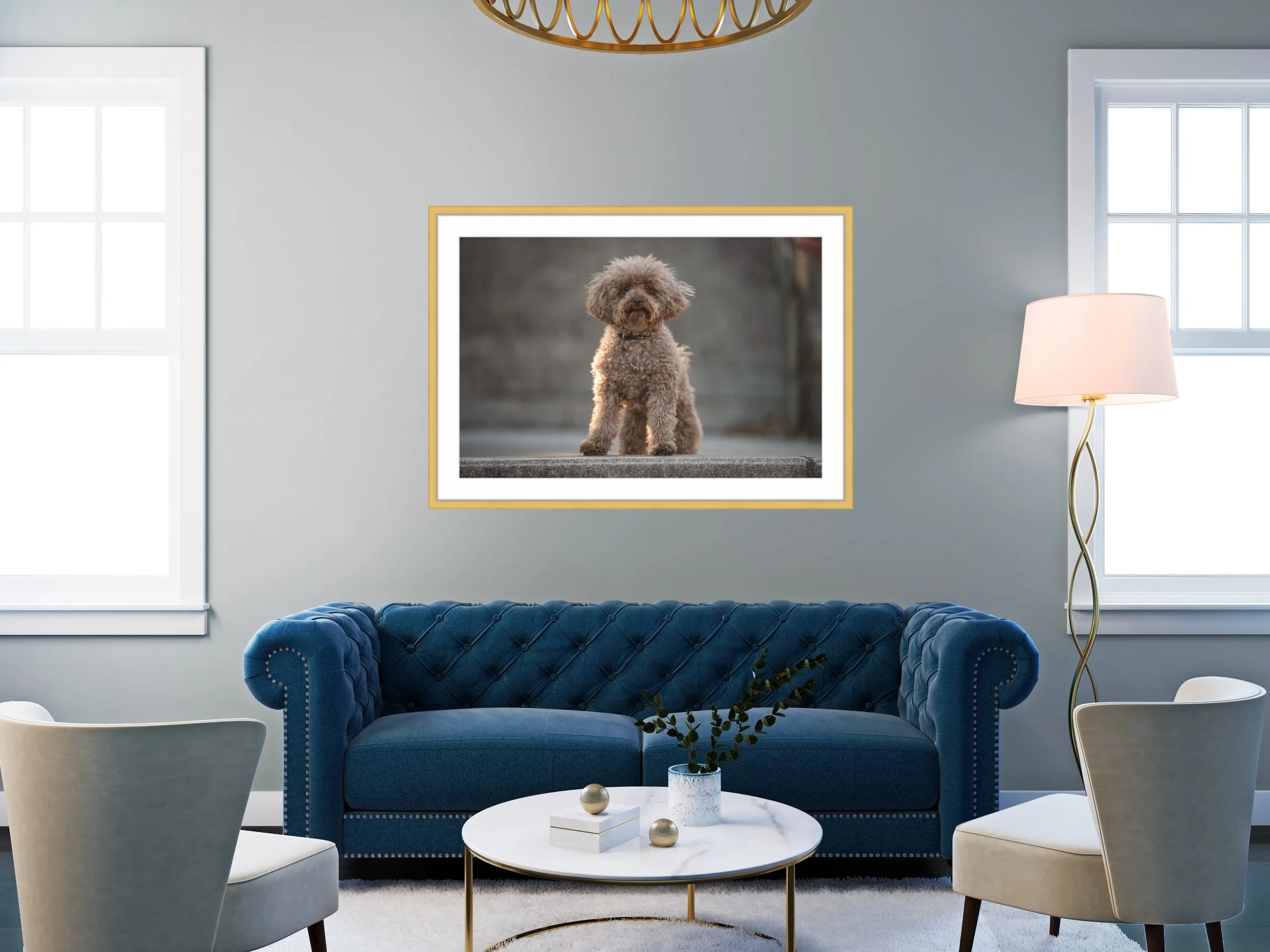
Now think about what colors look best on your walls. Warm neutrals? Golden tones? Caramel and cream?
January and February are incredible months for dog photography in Georgia — and this is exactly why.
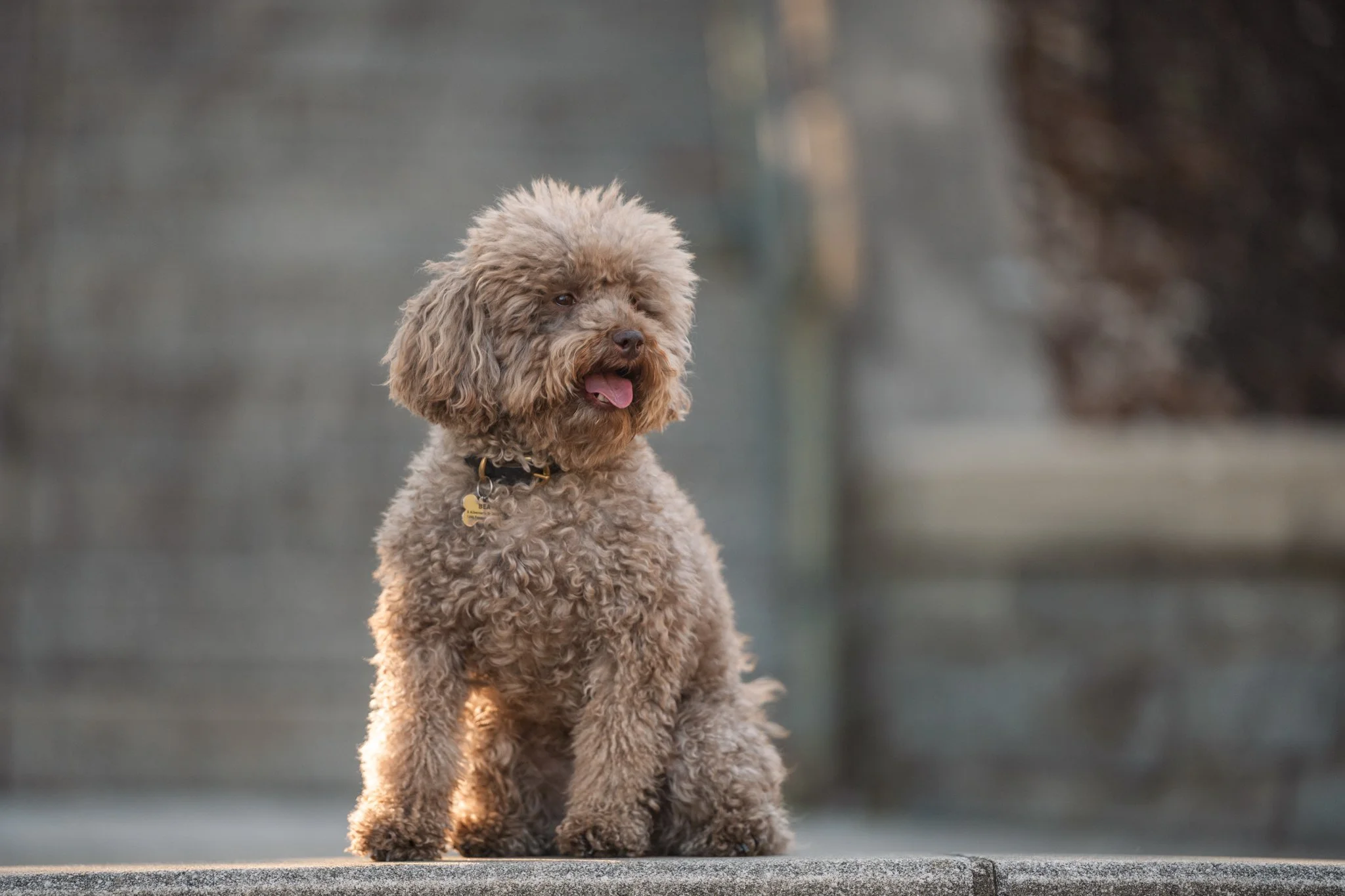
Winter in the South isn’t often snowy.
It’s soft. Neutral. Muted in the most beautiful way.
Winter Creates a Monochromatic Backdrop That Warm-Coated Dogs Were Made For
The grass turns gold. The leaves fade to warm brown and tan. The whole world becomes a gentle, quiet canvas.
Instead of competing with the bright greens of spring or the vivid reds of fall, your dog becomes the focal point — naturally, effortlessly. This is where wall art really works. Because the best pieces are the ones where the background doesn't overpower the dog, the tones complement your home, and the colors feel timeless.
Winter does all of that without trying.
It's Cooler — Which Matters More Than You'd Think
Summer sessions are beautiful. They're also hot.
A lot of dogs get warm the second we step outside — tongues out, heavy panting, tired after a short burst of activity. It's a mood, and not always the one you want on your wall.
Winter solves that. And for flat-nosed breeds — Frenchies, pugs, Boston Terriers, English Bulldogs — winter isn't just ideal. It's genuinely safer. Brachycephalic dogs can't regulate heat well even in late spring and early fall. If your dog has a squishy face, this is their best photo season, full stop.
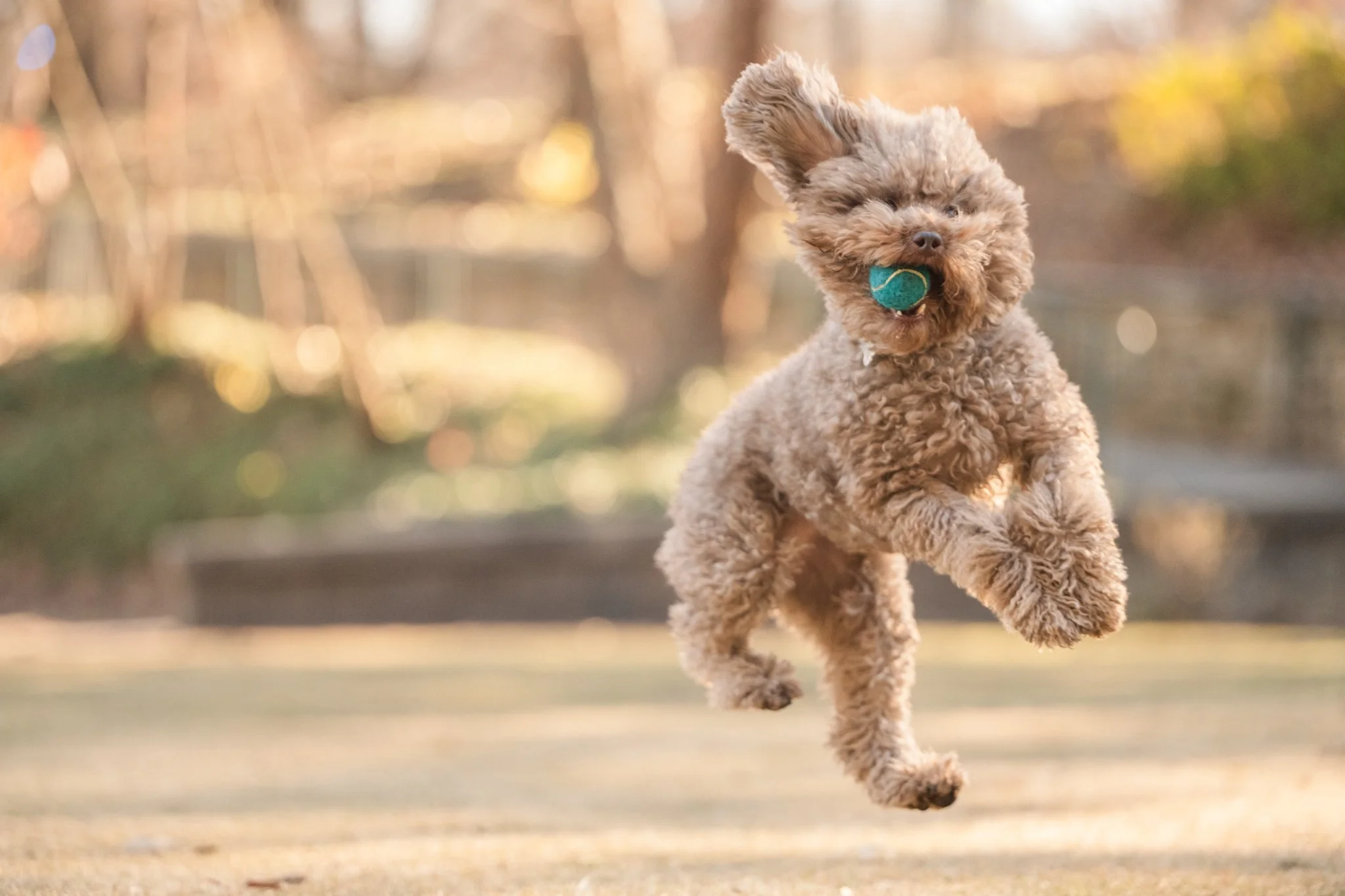
In cooler temps, dogs:
Pant less
Play longer
Move more comfortably
Look more relaxed
Fewer People Means Calmer Dogs
Here's a perk most people don't think about: nobody is at the park in January.
It's cold-ish. It gets dark early. Everyone's home in fuzzy socks complaining about it.
Which means: fewer dogs potentially running up, fewer kids, fewer distractions, fewer people in the background. We often get the whole location to ourselves.
For a dog who's easily overstimulated, nervous, reactive, or just happier in a quieter environment — winter gives us the space to work that summer simply can't.
Earlier Start Times Fit Real Life
Pet photography sessions always begin two hours before sunset.
In summer, that's a 7–7:30 PM start. You're sweating through golden hour while thinking about dinner.
In January and February, sunset is around 5:30 PM. We start at 3:30. You're home by dinner. The dog is pleasantly tired. Nothing disrupts the evening.
The Bottom Line
If you want artwork that feels warm, elegant, and harmonious on your walls — especially if your dog has a warm-toned coat, hates heat, or does better with fewer distractions — January and February might be the most beautiful months of the year to make these images.
The final results are consistently some of my favorites of the whole year.
→ Read next: