A 5am alarm is a hard sell. I know this. I'm asking you to set it anyway.
Here's the thing about sunrise sessions that the evening people don't fully appreciate: the morning isn't just a time slot. It's a completely different experience — for you, for your dog, and for the portraits you're going to hang on your wall.
Let me show you exactly what changes.
What the Light Actually Does
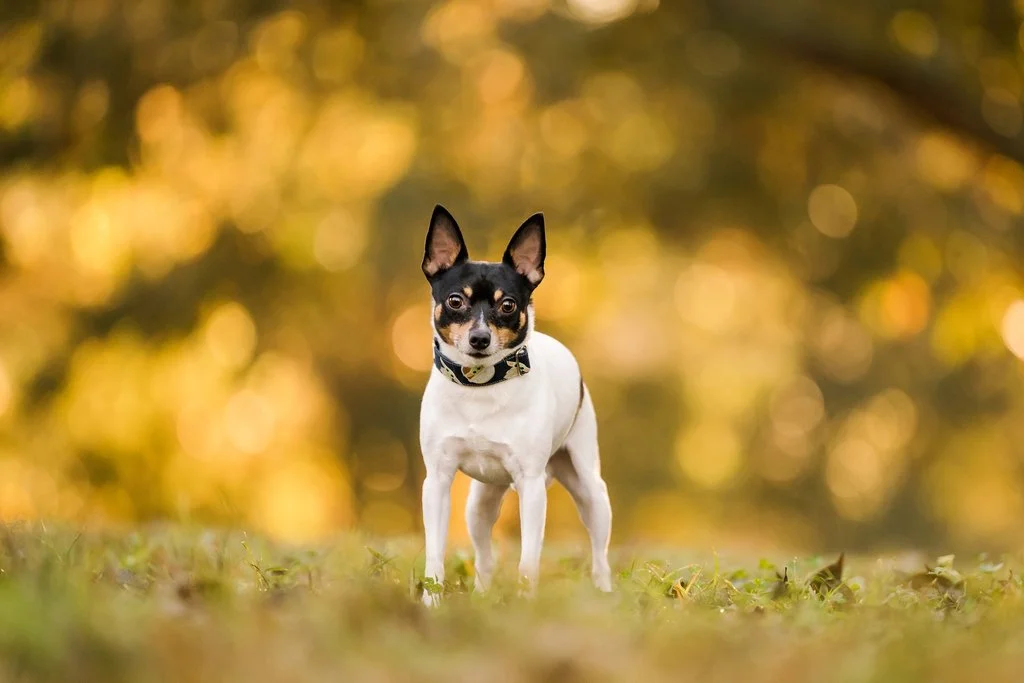
Both sunrise and sunset give us what photographers call golden hour — that low, warm, directional light that makes everything look better than it does at noon.
But morning light has a specific quality that I keep chasing. It's softer. It wraps around things rather than hitting them from behind. In summer and fall, there's often a light mist sitting in the fields and low areas that catches the light and gives images a luminous, almost painterly quality. That mist burns off by mid-morning and you can't get it back.
For fluffy, double-coated, or light-colored dogs especially — Great Pyrenees, Goldens, Doodles, Poodles, Samoyeds — backlit morning light is extraordinary. It creates a rim of glow around every hair that makes portraits look like they were lit by a professional studio setup. It just happens naturally, in a field, at 6:30am.
The Dogs Who Benefit Most from Sunrise
Brachycephalic breeds — Boston Terriers, French Bulldogs, Pugs, Cavaliers, Pekingese, Tibetan Terriers, Shih Tzus, Bulldogs, Boxers — have a harder time regulating their body temperature than most dogs. Even in mild heat, they work harder to cool themselves down. Getting them outside before the temperature climbs isn't just a preference, it's a health decision.
Senior dogs who tire more easily have their best energy in the morning. A two-hour sunrise session with an older dog is far more likely to produce the alert, bright-eyed, fully present portraits you're hoping for than an afternoon session where they've already had a full day.
Anxious and reactive dogs do their best work with fewer distractions around them. Early weekday mornings at most parks mean almost no foot traffic, no other dogs, no children running across the field. The environment works with us instead of against us.
High-energy puppies who are difficult to settle are often at their best in that window first thing in the morning before the stimulation of the day fully kicks in.
Urban Locations Require It
If you want to photograph in the city — Ponce City Market, Georgia Tech campus, Roswell's Canton Street — a sunrise call time isn't optional. It's the only way to have those spaces to yourself.
Atlanta wakes up fast. By 8am, the BeltLine is busy. By 9am, the shops on Canton Street are opening. By the time the city is fully awake, the intimate, unhurried feeling that makes urban dog portraits feel like art rather than snapshots is gone.
The window is small and beautiful. We go in it.
January and February Are Secretly the Best Months
Nobody talks about this enough.
Winter mornings in Georgia give you cooler air (comfortable for every dog, every breed), softer more even light throughout the longer window before the sun gets high, and a landscape that most people overlook — bare trees with beautiful structure, dormant fields with a quiet quality that's completely different from summer green. I love dogs photographed against a monochrome golden warm scene.
If you've been putting off booking, winter morning is the answer.
→ Read next: