One Night
I had one night.
It had been storming for days before and was looking like it would storm again after. Wednesday was the window. And when you only have one night, you don't get to fall in love with a plan.
So I made a Facebook call for a specific dog — light colored, confident, the kind of dog who could hold a stay while I worked around them — and I showed up at UGA with an idea in mind and a willingness to let go of it if I saw something else.
Hitman
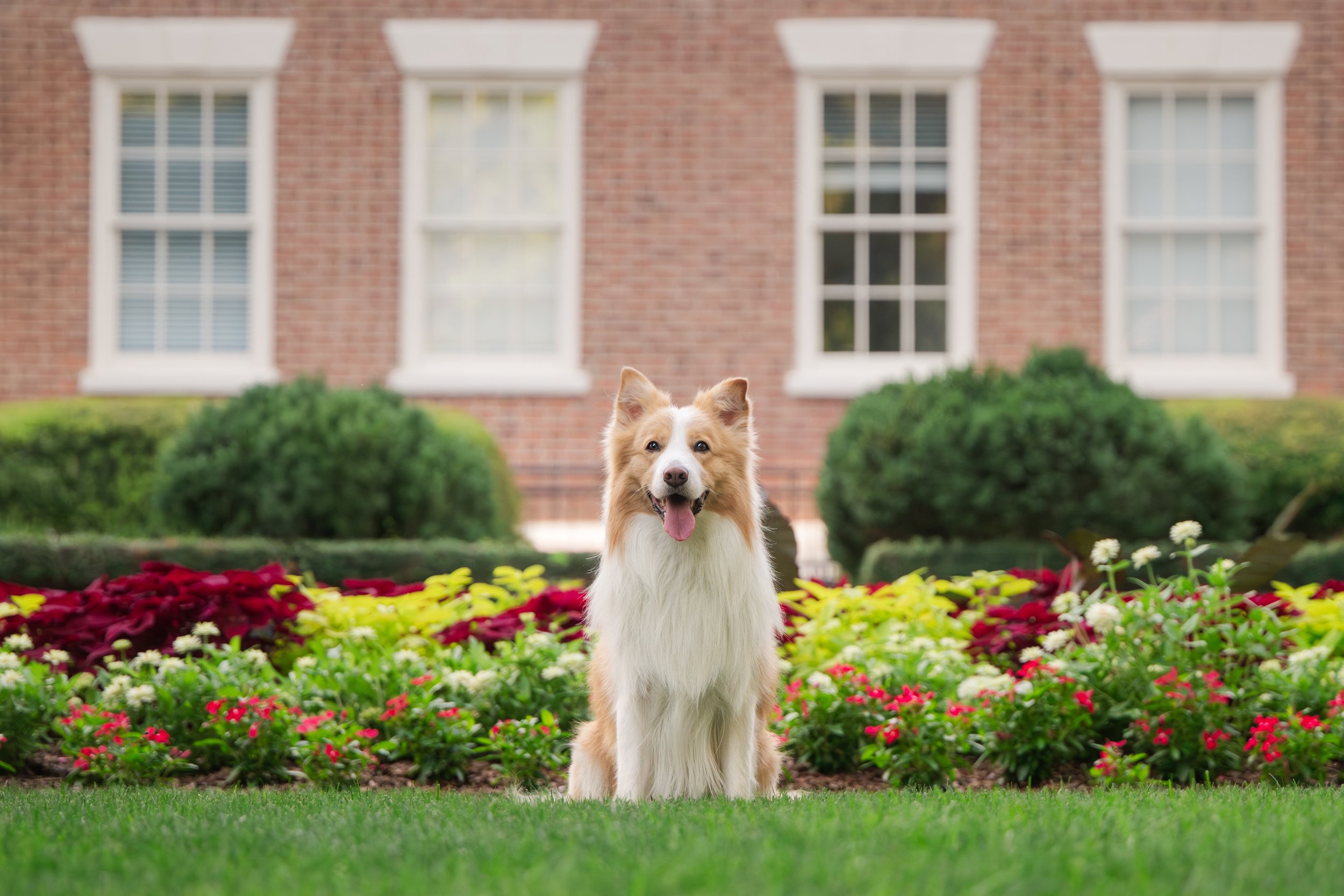
When his mom answered the call, I was drawn to him immediately. Partly the coloring. Partly something else.
A few years ago I photographed a deaf Border Collie named Hush — a dog that belonged to my friend Katy — and I had a real affinity with him. My very first Boston Terrier rescue, Bocephus, was also deaf. We used to joke that he was our best listener, because deaf dogs watch you constantly. They're hyper-aware of where you are, what you're doing, what you need. There's something about that quality I've always found deeply moving in a dog.
Hitman isn't deaf. But he is Hush's nephew.
When Katy told me that, I felt like the night was already off to a good start.
Keep Moving
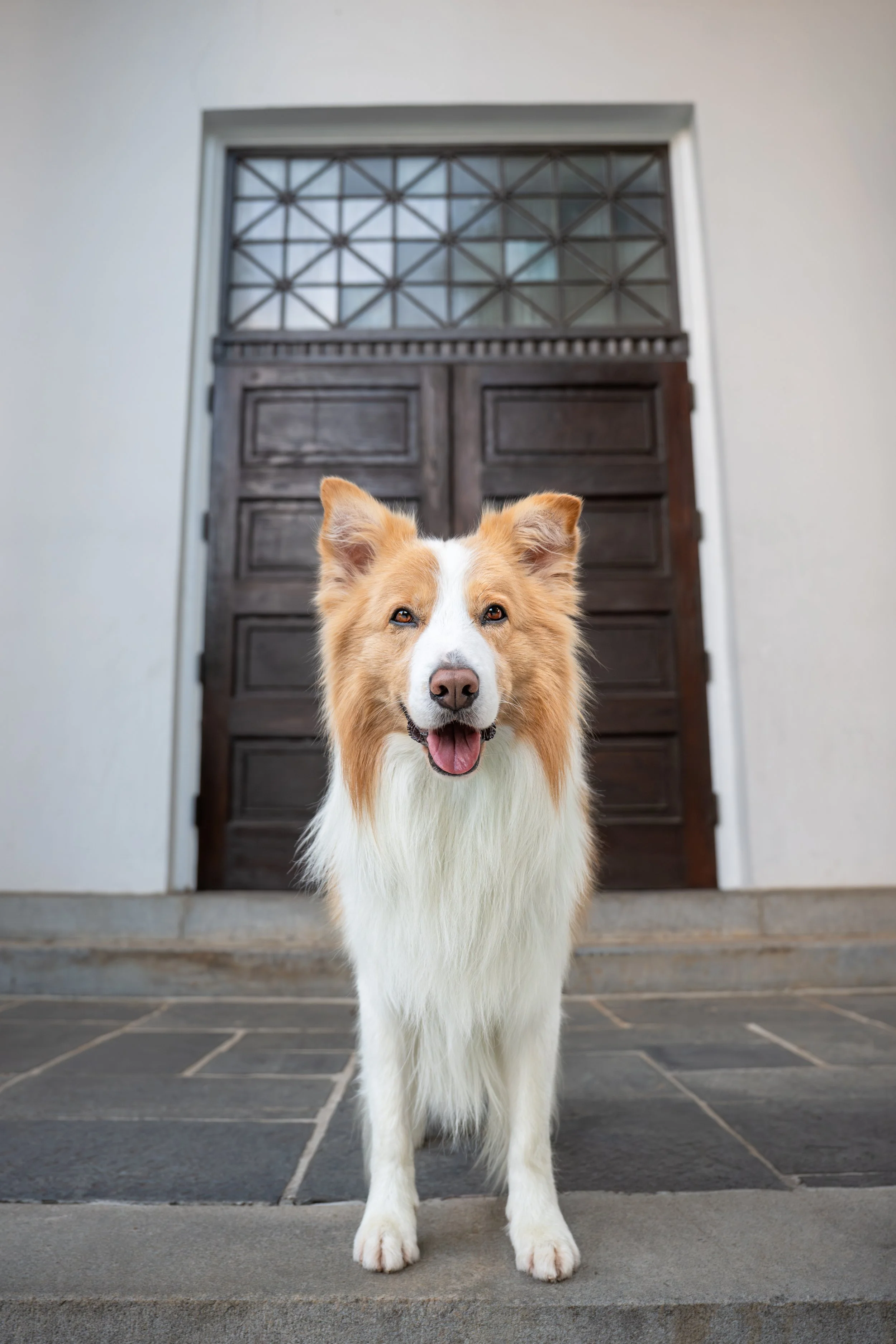
I had a plan for the image I wanted that evening — white columns, white building, a pale dog framed in a dark wooden door - lots of layers and contrast. We shot it. Actually a few variations of it. I got what I came for.
And then we kept walking.
Because one option isn't enough when you only have one night.
There's a tree nearby with a beautiful V-shaped branch I've used before — didn't have the centered symmetry I was after for this particular challenge, so we moved on. We tried the flower beds, using the windows in the building as a centering element behind Hitman and the natural repeating symmetry of the plantings framing him. Pretty. But not quite it.
Then I spotted short stairs in a brick semicircle and put him up there — but when I saw a metal railing cutting straight through the background I knew that wouldn’t work either. So we stepped back again.
That's when I noticed at the benches.
My first reaction was the armrests that would cut through his chest and the slats that make some dogs hesitate to stand on them. I almost kept walking.
But we were already there. Might as well try it.
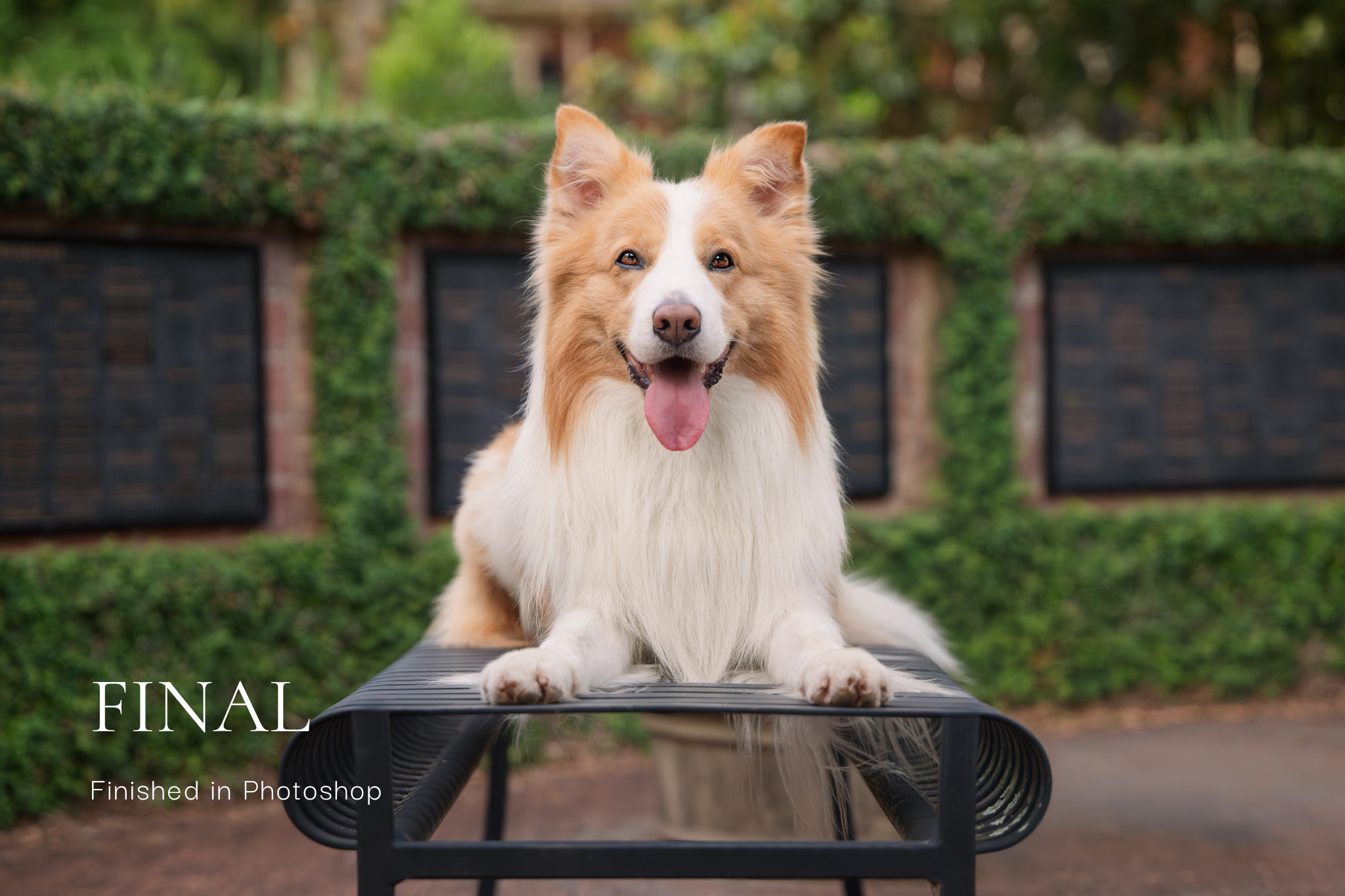
We asked him up on the bench, I looked through the viewfinder — and suddenly I could see exactly what the image wanted to be. Hitman centered directly between the two plaques on either side, framed by the center plaque behind him. Natural symmetry from the ivy. Man-made symmetry from the architecture. Exactly the centered composition and symmetry the challenge brief was looking for.
I would have missed it completely if I hadn't kept going after the door.
What Made This Work
I want to say something about Hitman, because not every dog makes this kind of work possible. In fact, most of the dogs I photograph would have never had the patience to do what Hitman did.
His mom could place him in a stay, physically lift a foot, set it down somewhere new, and he would just stay there — cool, collected, the same happy expression through every adjustment and reset. He reminded me of Hush in that way. That quiet confidence. That ease in his own skin.
He was a gentleman through every single frame.
The Edit
I shot intentionally underexposed to protect the detail in his white fur. The bones of the composition were already there in camera — the centering, the symmetry, the repeating plaques. But it needed work to let those elements become what they were meant to be.
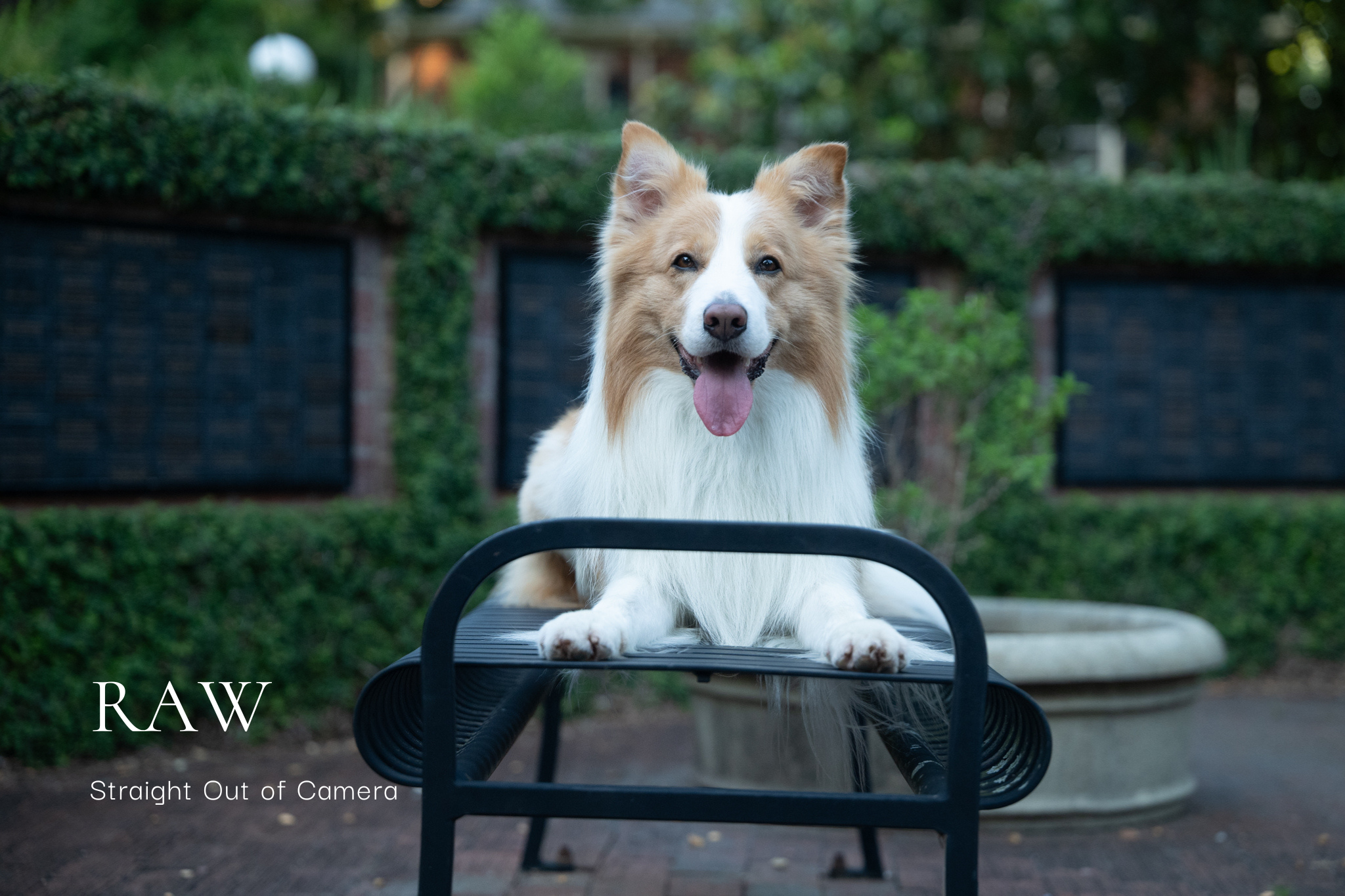
RAW Image
Image straight out of camera without any adjustments or edits.
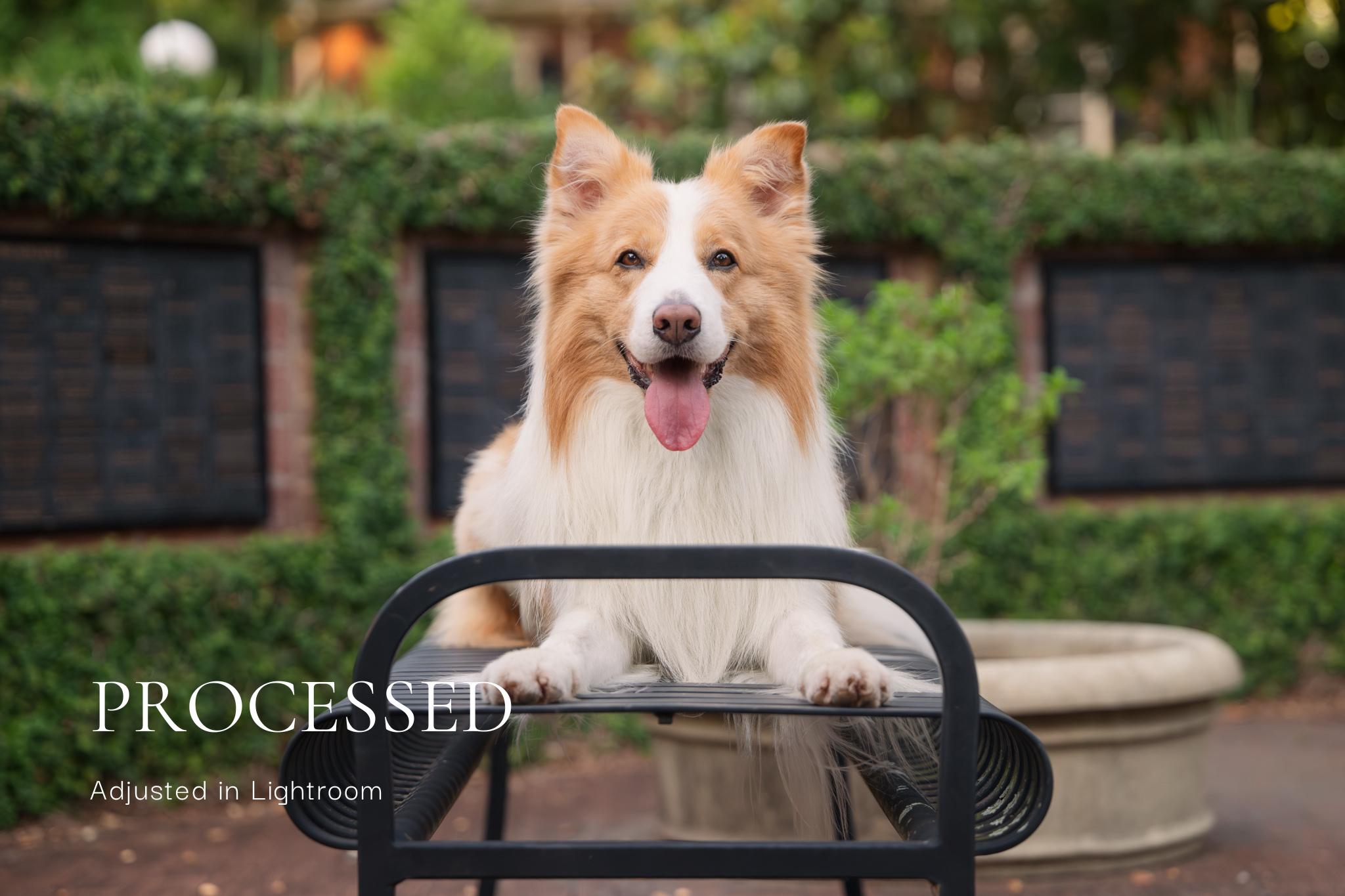
In Lightroom, I corrected the white balance first. What you're seeing in the final image is what golden hour actually looked like that evening — warm and sunny, the last light of the day falling onto him. I lifted the exposure while carefully protecting the whites, applied my tone curve, and added two masks: one across his legs to pull the highlights down where the light caught hardest, and one over his red fur to open the shadows and pull out that warmth in his coat.
Lightroom
Processed image after Lightroom adjustments are made to white balance, exposure, highlights, and shadows.
Photoshop is where the composition became what I'd seen in my head. I removed the planter and foliage on the right side interrupting the wall's symmetry. I did all my normal clean up - eye boogers, lint, stray hairs, litter on the ground, debris, spit bubbles, - all disappear. Eyes sharpened. Catch lights lifted just a touch to make them glitter. Then — at the very end, almost as an afterthought — I decided to try removing the armrest. The thing that had almost made me keep walking.
It worked exactly the way I hoped.
Done.
Final Image
Edited portrait with ivy wall and architectural symmetry at UGA Athens Georgia
What the Judges Said
Hitman's image earned a Top 10 in the Embark Composition 101 challenge.
The judges wrote: "Fantastic use of the location elements to cleverly centre and frame the subject. An engaging expression with eye contact draws the viewer in to the gorgeous pup."
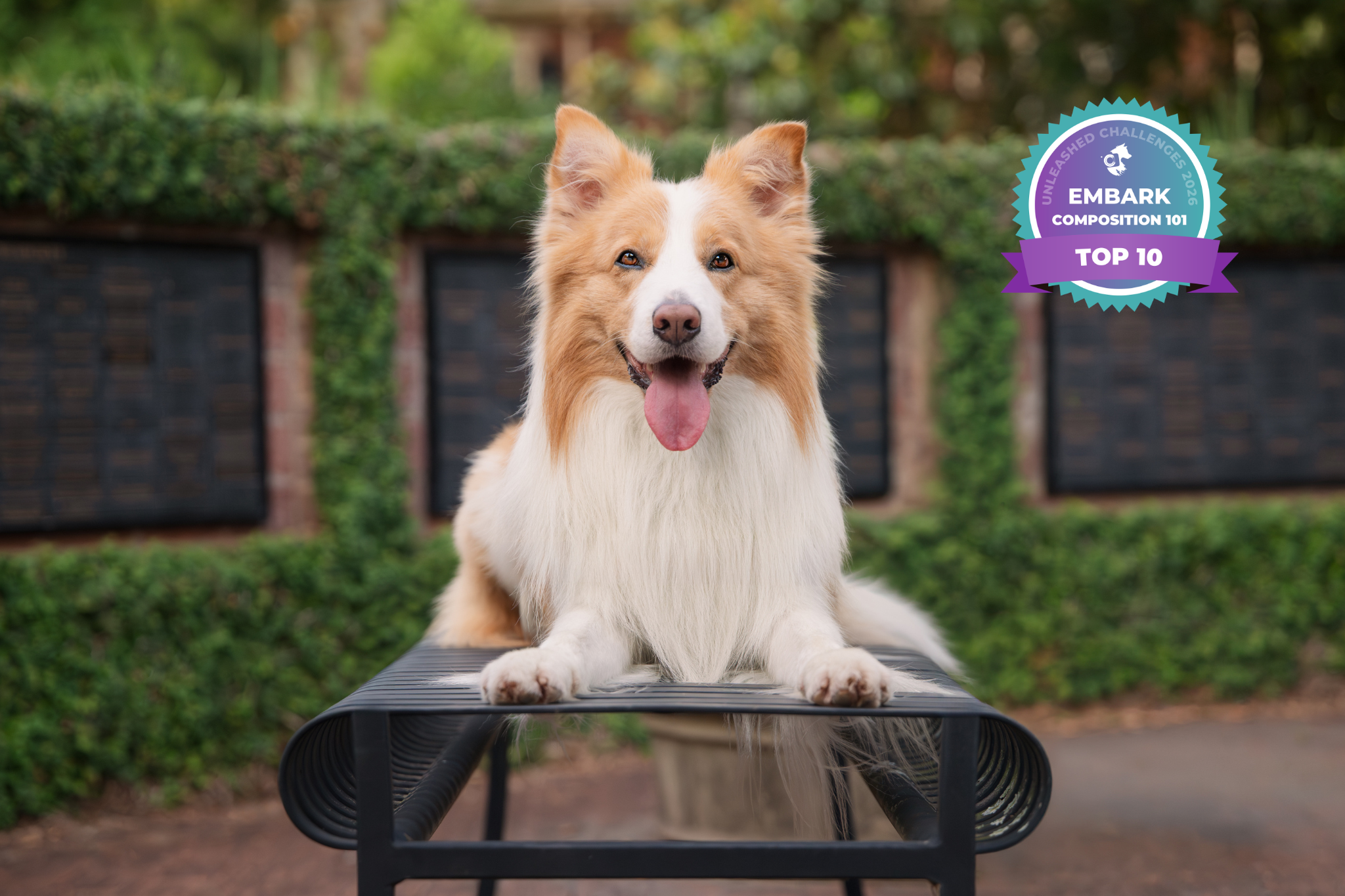
One night. One window. A plan I was willing to abandon and a bench I almost walked past.
Sometimes the image you need is just past the thing you'd already decided wasn't worth trying.
→ Read next: