
When people say an artist has "an eye," I didn't fully understand what that meant until I started training my own.
What it means, practically, is this: I walk into a space and see something completely different from what most people see. You see a park. I see a specific patch of filtered light through a gap in the tree canopy, a low stone wall that would make a natural leading line, a hedge that could serve as a clean background if I position my dog 15 feet in front of it.
You see a location. I see four or five portrait opportunities within a hundred feet of each other.
Here's what I'm actually looking at when I evaluate a spot for pet photography.
Light First. Always Light First.
Everything else is secondary.
The most beautiful location in the world is unusable if the light is wrong. A parking lot with perfect soft directional light will produce better portraits than an iconic backdrop in harsh midday sun.
What I'm looking for: soft, filtered light that wraps around a subject rather than landing hard on top of it. Light that comes from behind rather than directly overhead.
That's why I only shoot during the two hours after sunrise and two hours before sunset. It's not just aesthetic preference — it's a technical requirement. The rest of the day, even in beautiful locations, the light works against me. Working outside those golden hours require bringing external light with me, which removes a lot of the freedom the dogs have to move around within the space.
What Color Is Reflecting Into the Frame?
Light doesn't just illuminate — it carries color from whatever it bounces off of.
A dog photographed near a green lawn in full sun will have a green cast on their underside. A dog near a bright blue building will pick up that color. A dog near a warm cream wall will be bathed in a flattering, golden reflected light.
This is one of the reasons I always look for what's behind and beside my camera, not just what's behind my subject. That cream wall behind the dog? It's reflecting clean, warm light. That red brick? It's casting an unflattering color cast I need to avoid.
The HSMC Example
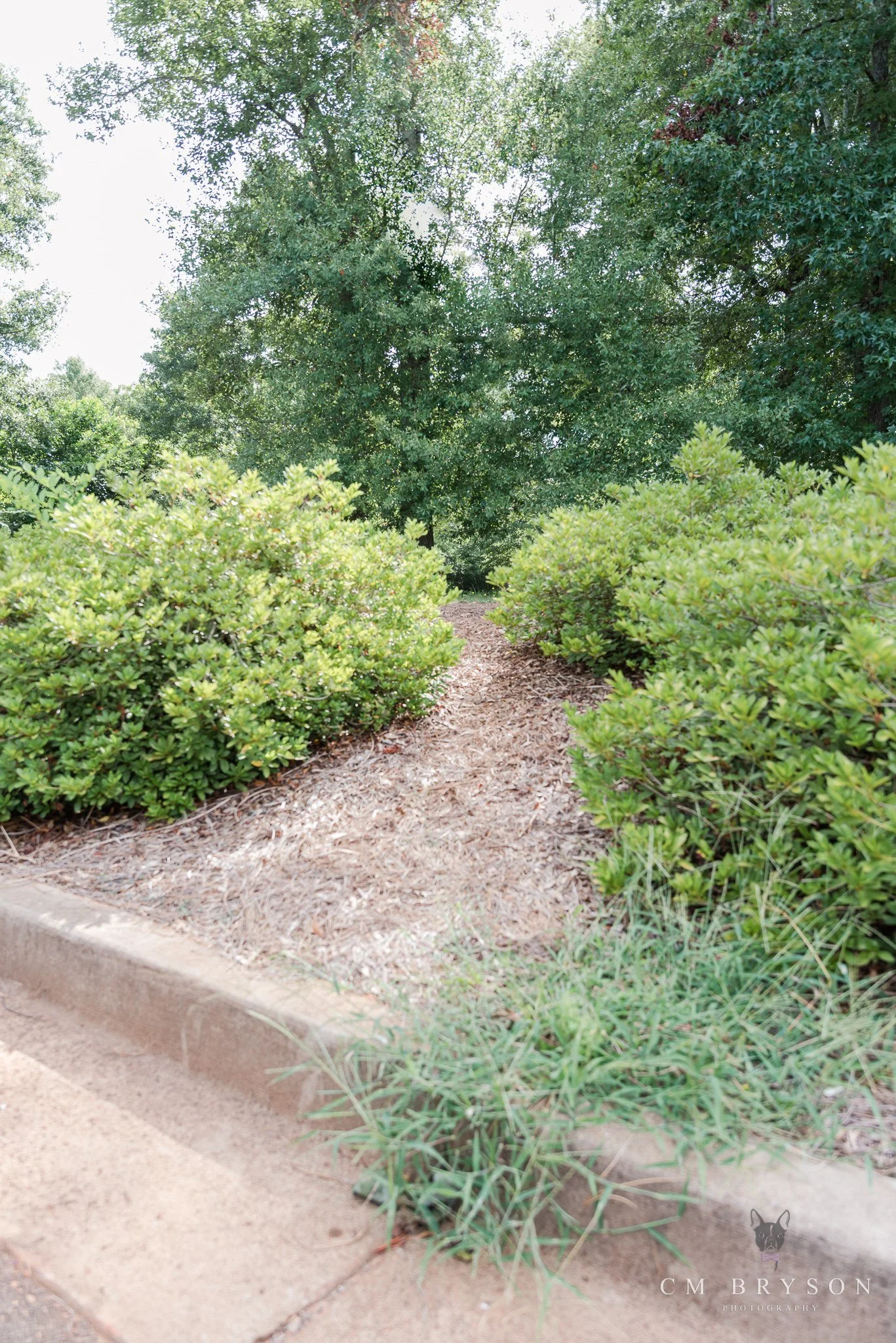
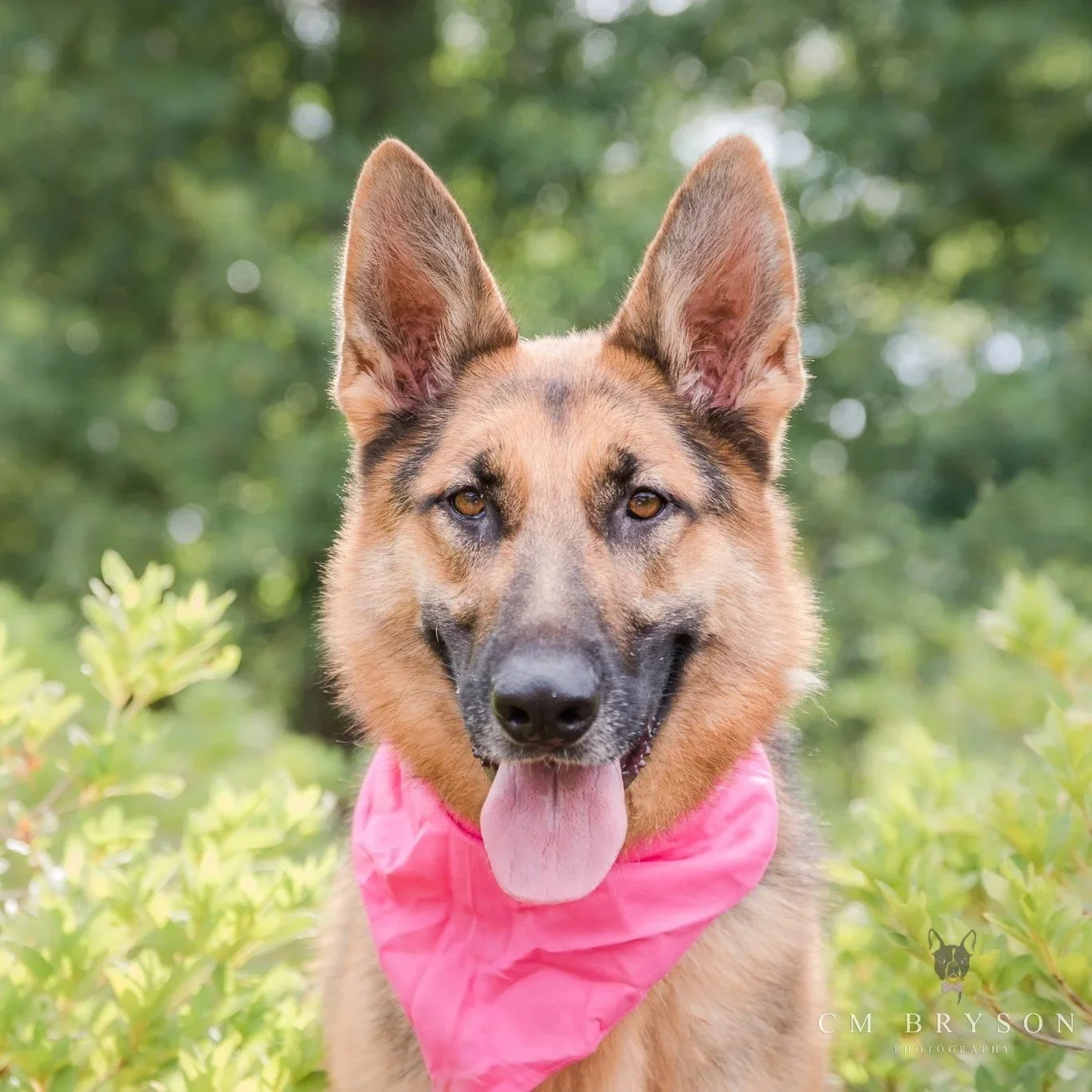
My clearest illustration of how differently a photographer sees a space: the Humane Society of Morgan County in Madison, where I photograph their adoptable dogs regularly.
On first look, the area I use isn't much to see. There's a parking lot, a storage shed, some agility equipment, a dumpster. None of it reads as a portrait location.
But behind the dumpster is a section of cream-painted brick wall. And in front of that wall, in the morning, there's a pocket of filtered light coming through the trees on the east side of the property.
I position the dog in that pocket of light. I angle my camera so the cream-painted wall is reflecting light onto the front of the dog, and the trees are far enough back that they go soft and dreamy. I adjust my angle and use a long lens to narrow my field of view to hide the dumpster, the storage shed, the agility equipment, and the parking lot.
What you see in the final portrait: a dog in beautiful soft light against a tree filled, textured background.
What was actually happening: me standing three feet from a dumpster.
Texture as a Design Element
Backgrounds matter — but not in the way most people expect.
The goal usually isn't a dramatic background. It's a background with enough texture to feel alive without competing with the dog as the subject. Soft bokeh (the blurring of background elements when shooting with a wide aperture) helps, but texture in the background catches the light differently than a flat wall and adds depth to an image even when it's blurred.
What reads as texture in portraits: a hedge, a stone wall, dappled light through leaves, the edge of a field. What competes instead: too bright light, busy patterns, signs, other people.
Angles Are Everything
I move a lot during a session. Not randomly — intentionally.
Every time I shift my position, the background changes entirely. Moving five feet to the left might bring a parking lot into frame. Moving five feet to the right might replace it with a tree line. Getting low might put the sky in the background instead of a storage building.
The location doesn't have one right angle. It has a dozen, and part of what I'm doing throughout a session is finding the ones that work and avoiding the ones that don't.
What This Means for You
You don't have to know any of this to have a great session. That's my job, not yours.
But it does mean you can trust me when I suggest a location that doesn't immediately seem obvious. A parking lot with the right wall and the right light will produce better portraits than a famous landmark at the wrong hour. A quiet, slightly unremarkable spot where we're the only ones there will produce better portraits for a nervous dog than a stunning location that overwhelms them.
I'm not seeing what's pretty. I'm seeing what will work for your dog.
→ Read next: