
Before I became a professional pet photographer, I looked for pretty places to photograph my dogs.
My process was simple: find something that looked nice, put the dog in front of it , and point the camera at it.
The problem: beautiful places don't automatically make beautiful photographs. And once I understood why, everything about how I choose portrait spots at locations changed.
Here's the three-step process I use now — for every location, every session.
Step 1: Find the Light
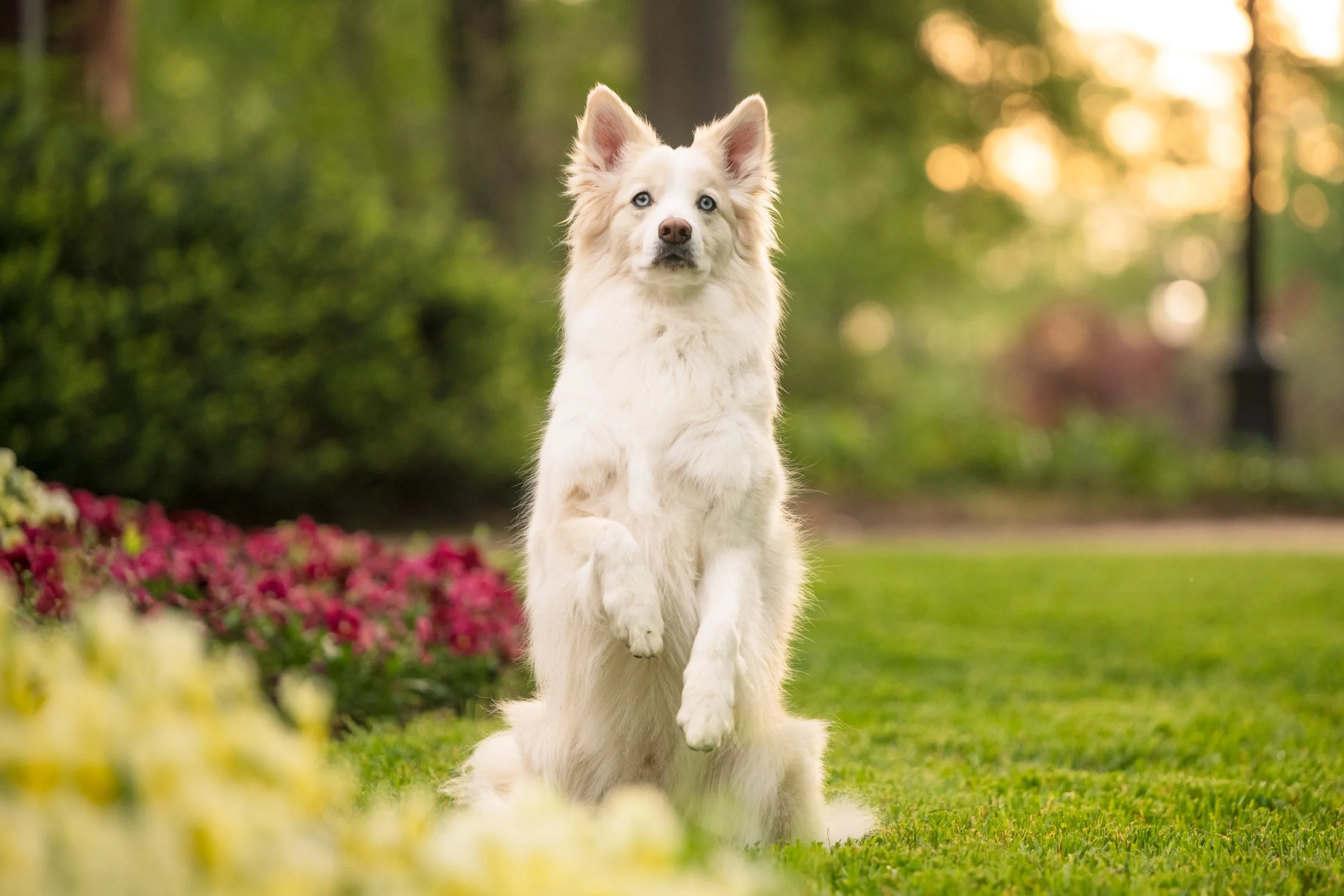
Photography is light. That sentence sounds obvious, but following it to its logical conclusion changes where you look first.
The first thing I do at any location isn't look for a pretty background. It's figure out where the light is — where it's coming from, how it's falling, and what it's doing to anything I might photograph in front of it.
It's easy to spot a beautiful brick wall or a cluster of wildflowers and want that in the image. But if the building across the street is bright red, its color will bounce onto your dog and make all their whites look pink. If there's a gap in the trees creating harsh side light, one side of your dog's face will be blown out while the other falls into shadow.
Good light forgives a lot. Bad light undermines even the most beautiful location.
For my sessions, I'm typically looking for one of two things depending on the image: soft, indirect light that wraps around the subject evenly, or filtered backlight — sunlight coming through a canopy of trees behind the dog, with open sky in front so they're still well lit. Both require knowing where the sun will be at session time, which is one reason I plan every session around the two hours before sunset.
Step 2: Choose the Background
Once I know where the light is, then I look at the background.
I want a background that puts all the attention on the dog — nothing bright, distracting, or competing for the eye. When I'm photographing with a wide aperture lens (which I do for almost every portrait), backgrounds blur into soft, creamy tones. What actually registers is color and brightness. A patch of harsh light in the background will read as a hot spot. A bright red object will pull the eye away from the dog's face.
I'm looking for backgrounds with color harmony — tones that feel related to each other and to the dog's coat. I'm looking for depth — enough distance behind the dog that the background genuinely blurs. And I'm avoiding anything visually loud enough to fight for attention.
A good background isn't always beautiful when you look at it directly. What matters is what it becomes when it's out of focus behind a dog that is perfectly in focus.

Step 3: Consider Your Dog
Once light and background are solved, the third question is: is this location right for your specific dog?
A spot that's technically perfect for photography might not work for a dog who's easily overstimulated, because it's near a popular trail with a lot of foot traffic. A beautiful open meadow might not work for a dog with limited mobility if getting there requires a long hike. An urban location might be exactly right for a confident, city-living dog and completely wrong for a dog who grew up in a quiet rural setting.
This is why I ask a lot of questions before every session. Not just about what your dog looks like — about who they are. Their energy level, their triggers, their comfort with strangers, their physical condition. The location should serve the dog, not the other way around.
When all three elements line up — great light, a background that works, and a space that's right for your dog — that's when we make the best images.
