Finding the Perfect Frame — How I Use Compositional Framing in Dog Photography
Framing is one of my favorite compositional techniques in dog photography.
The idea is simple: use elements of the scene — a doorway, a canopy of branches, a gap in a fence, a window, an arch — to partially or fully surround the subject. Done well, framing pulls the eye directly to the dog and creates a sense of depth and intention.
For the Emerge "Framed" challenge, I needed one image that made this work completely. What I thought would be a one-location effort turned into three.
The Rainbow Forest — Athens, GA
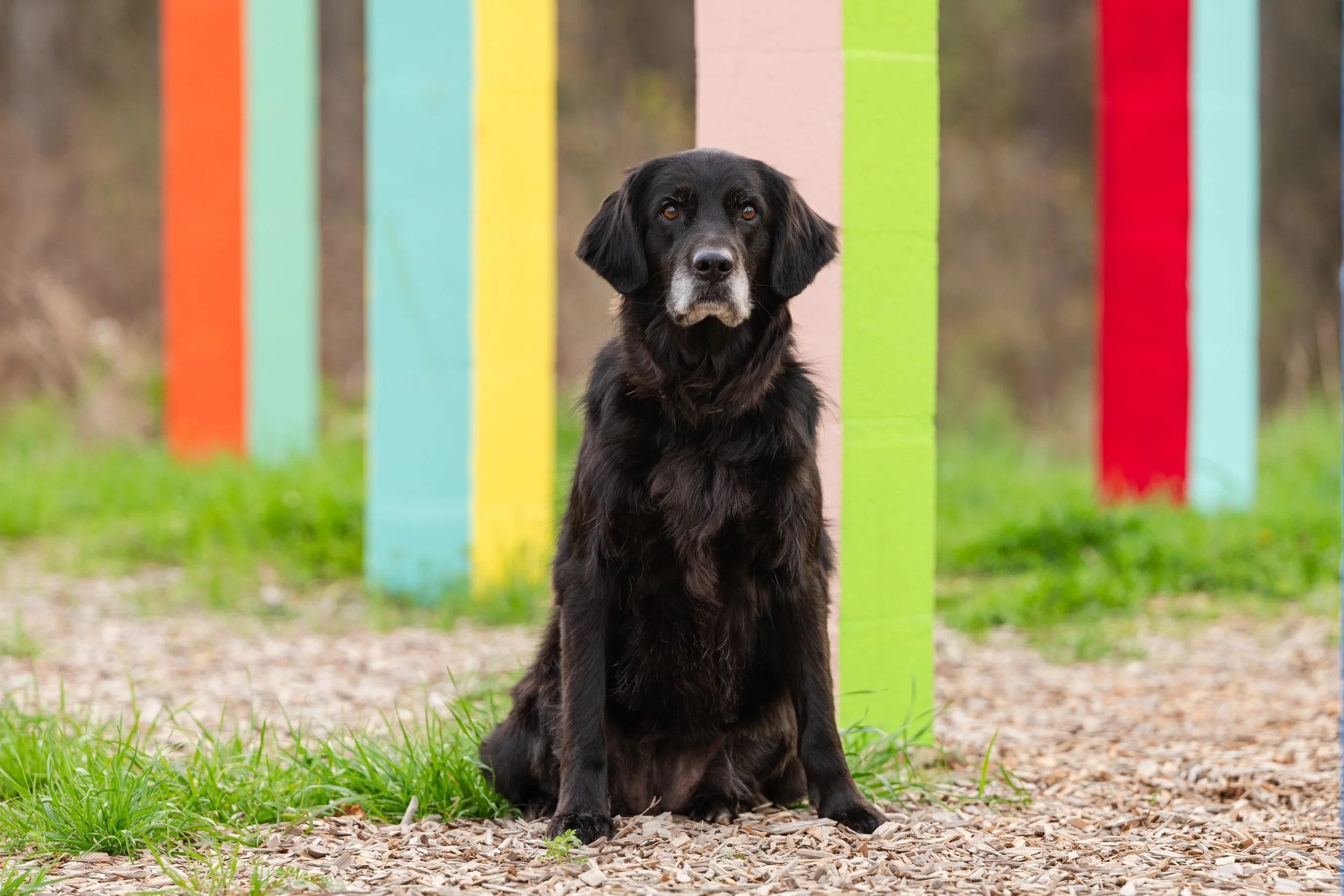
I started with Afton and her black goldador, Lizzie, at Rainbow Forest in Athens — a beloved spot where a stand of cinder block sculpture has been painted in a vivid rainbow of colors.
My original idea: Lizzie framed by the brightly painted block columns at the entrance. We got some genuinely fun images. I loved them.
But I wasn't sure I had the image. Something felt slightly off— the beams were slightly too far apart, slightly coming out of her head, the ground with a mix of mulch and overgrown grass too distracting, the frame competing with the subject rather than serving her. So I kept going.
The Barn Stall Door — Rutledge, GA
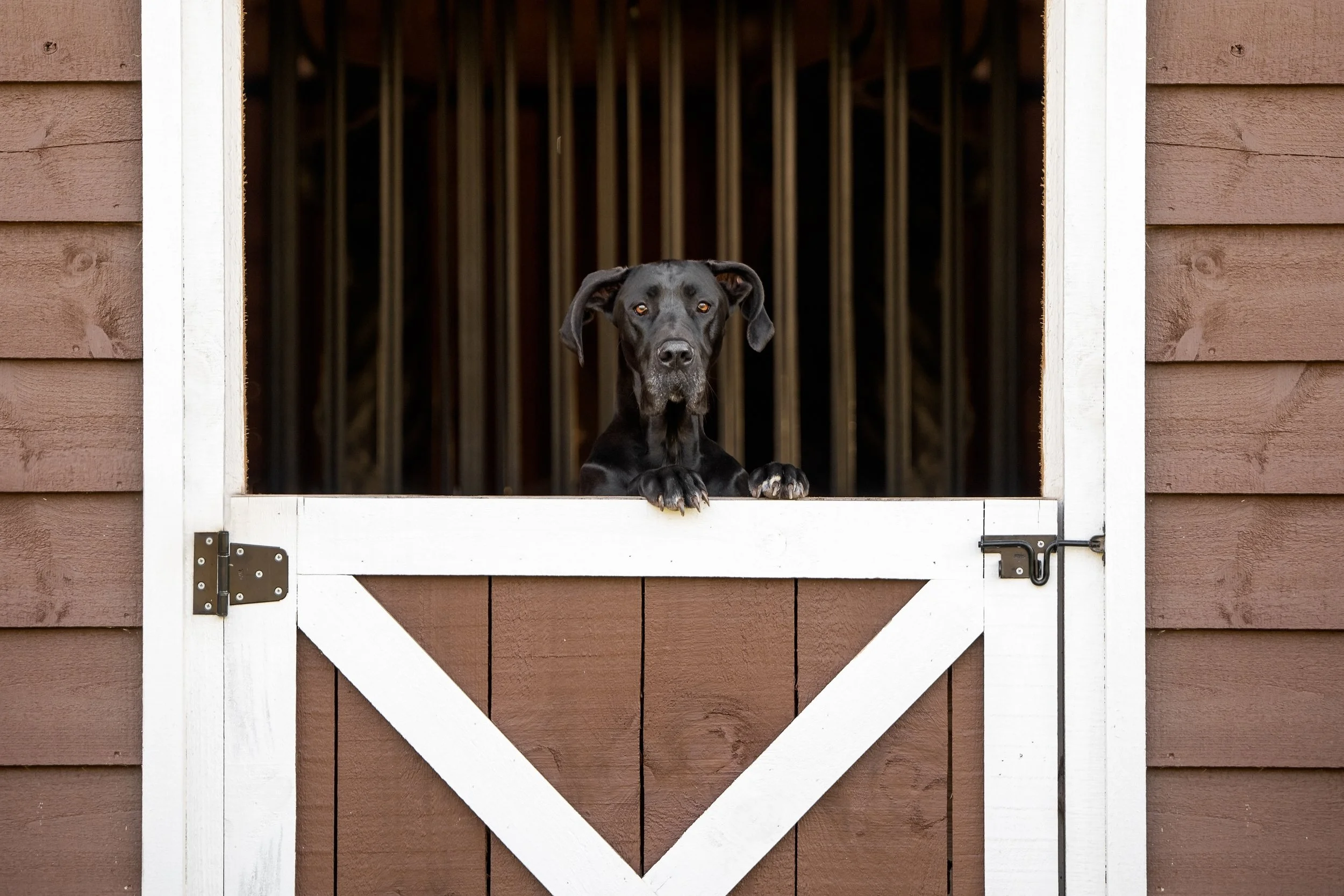
While editing an unrelated equine session, I found myself looking at a stall door and thinking: that's a perfect frame. The problem was that stall doors are designed for horses, and I wanted to photograph only dogs for the image challenges — which meant I needed a very large dog.
Enter Matilda the Great Dane, brought in by my friend Michelle. We found a stall at my sister-in-law's barn and bribed Matilda generously with chicken nuggets, which she was enthusiastic about.
The images of Matilda framed by the stall door were striking — that scale working in all the right ways. But something about the light, or the mood, or the setting didn't feel like my strongest submission. I loved the images. They didn't feel like the one.
Oconee Brewing Company — Greensboro, GA
Running low on time and with three strong candidates and no clear winner, I shifted focus to the next challenge brief — which required indoor photography.
That's when I thought of the now sadly closed Oconee Brewing Company in historic downtown Greensboro, Georgia. Dog-friendly, beautifully designed, full of interesting architecture. The staff generously agreed to meet me before opening with a couple of their own dogs.
We photographed everywhere: at the bar, in the brewery, on the stage, on the gorgeous outdoor patio. Both dogs were genuinely wonderful to work with. I was happy but not certain.
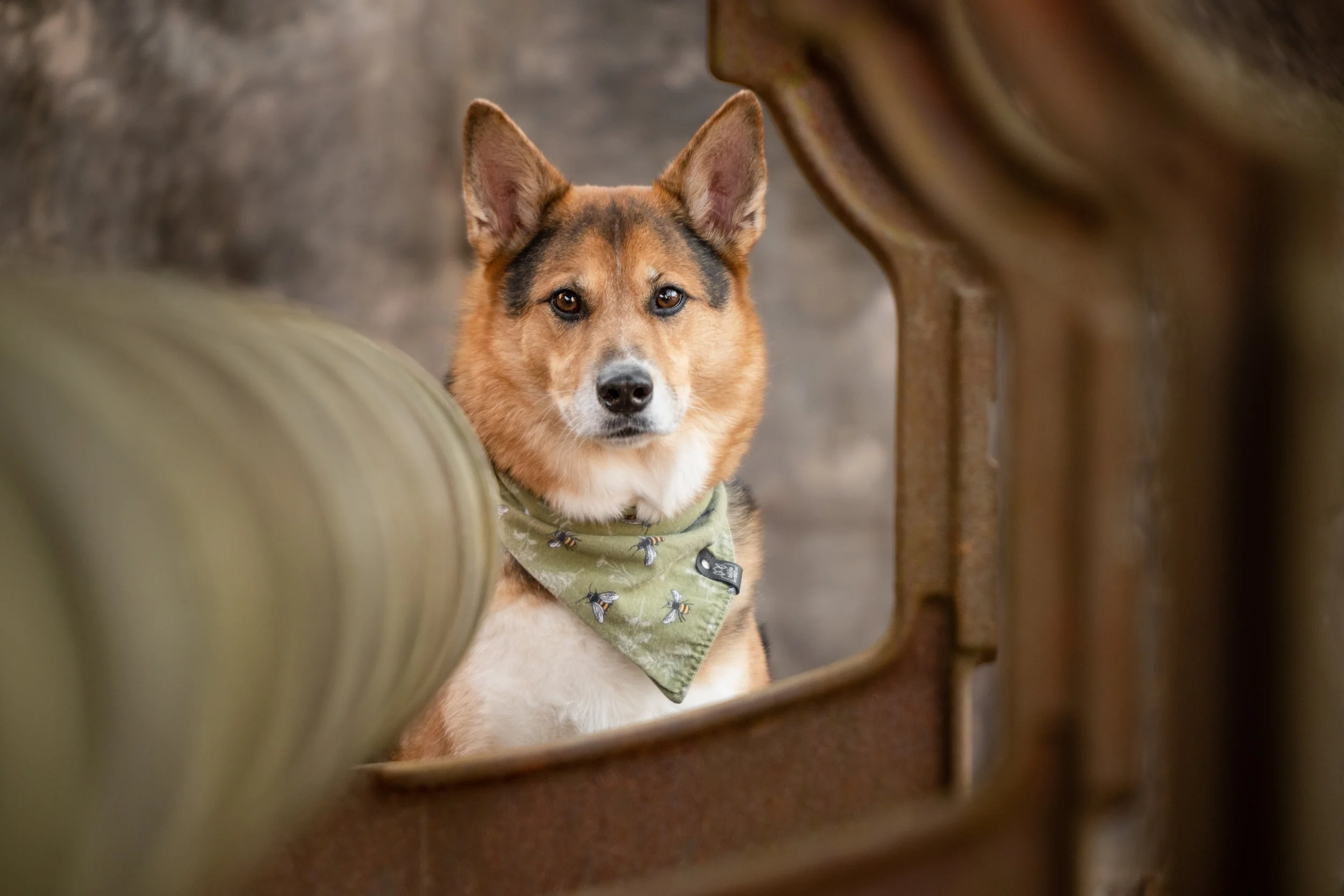
And then, almost accidentally, at the very end of the session, Michelle noticed an old piece of farming equipment just off the patio — heavy, geometric, beautifully worn. The metal matched Ruger's bandana almost exactly.
I instinctively made the frame. The equipment surrounded him. The light was right. The colors aligned.
That image earned Top 20 in the Framed challenge.
What Framing Actually Does
When compositional framing works, it does three things simultaneously: it directs the eye to the subject, it creates a sense of depth by layering foreground and background, and it adds context — the viewer understands something about the world the dog inhabits.
What it cannot do is rescue a poorly chosen location or bad light. The frame has to work with everything else in the image, not carry the whole thing.
That's why it took three locations and a serendipitous piece of brewery equipment to find the right one. Most of the best images come from being willing to keep looking until everything aligns.
→ Read next: