I've never had to stop a session and tell a client their dog is uncomfortable and we're not going to continue.
Not because a dog has never been uncomfortable for a moment during a photo session.
But because I'm watching long before we get to that dog’s threshhold.
What I'm Actually Looking For
Every session I'm running a constant read on the dog.
And also on the light, on the background, on whether the composition is working — those things matter, but they're secondary to what the dog is telling me in real time.
The signals I'm watching for:
Lip licking. A quick tongue flick that has nothing to do with treats. In dog body language, this is a calming signal — the dog is managing mild stress. It's subtle and most people miss it entirely.
Whale eye. When a dog shows the whites of their eyes at the outer edge. It means they're uncomfortable and worried.
Going stiff. A dog who was loose and wiggly suddenly holds very still. Not alert & focused on something in the distance, but that hard stiffness where all their muscles tense. That's tension.
Constantly breaking the behavior. If I'm asking a dog to hold a position and they keep stepping out of it, that's information. Either they don't understand what I'm asking — or they understand and they're telling me no.
These are the signals that arrive before a dog is truly distressed. If I wait until a dog is visibly shut down or showing obvious stress, I've already missed several earlier conversations.
The Pose That Tells Me the Most
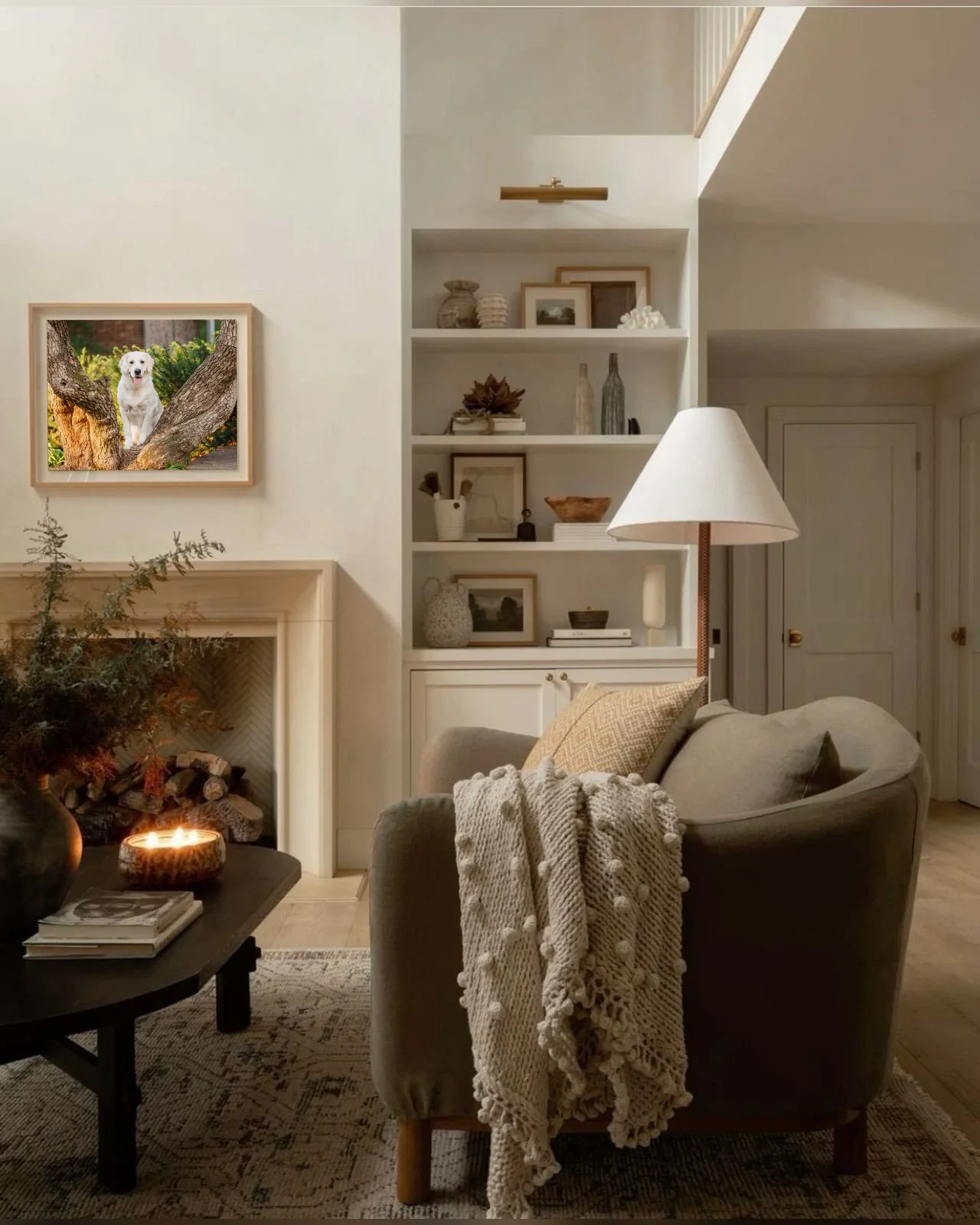
One of the poses I use often is what I call Paws Up — asking a dog to place just their two front feet up on something slightly elevated. A log, a garden wall, a rock. It creates a dynamic, beautiful line and naturally encourages a dog to hold still because there's an edge under them.
But for some dogs, that position is a real ask.
For a nervous dog, putting their front feet up on something can feel vulnerable — exposed in a way that their instincts don't love. What I watch for: shoulders hunching forward, head dropping, the whole front of the dog shrinking down. That's not a dog who doesn't understand the trick. That's a dog telling me the trick doesn't feel safe right now.
For an older dog, the physical ask is different. I'm watching for hesitation before they commit to the step up, or trembling in the back legs once they're there. That's not nerves — that's their body working harder than it looks from the outside.
Same pose. Two different conversations. Both deserve a response.
What Changing Direction Actually Looks Like
When I get those signals, I don't make it a big deal.
If the dog doesn't seem to understand what I'm asking, I'll coach the owner through a lure — how to use a treat to guide the dog into the position and reward the instant they get there. A few repetitions and most dogs figure it out quickly. Once they know that hitting that position pays, they'll offer it willingly.
If the dog understands and is still saying no whether it’s because they are unsure or worried or because physically it’s too much — we just shift.
I'll tell the owner: okay, let's bring her down off the log and ask for a sit right in front of it. Or: let's back up about fifteen feet — I want you to jog alongside him and we're going to get him jumping over it.
The client experiences this as momentum. We're trying things, we're moving, we're finding what works. And we are. The dog is getting a break, a chance to move their body, a moment to reset. And the dog directed the whole thing without ever saying a word.
Why This Matters to Me
The entire reason we're here at a dog photo session is because we love dogs.
I love dogs — all of them, every shape and temperament and age. I’ve built an entire business, an entire life around loving dogs. The owner loves their dog specifically. And I wouldn't ask anyone I love to do something that makes them truly uncomfortable or afraid.
The animal deserves that dignity. To feel safe throughout the session. To feel comfortable. To feel seen and understood. To feel like nothing is being asked of them that they can't give willingly.
And here's the thing — those are the images we want anyway.
When a dog feels safe and confident and completely themselves, that's what shows up in the photograph. Not a performed pose. Not a moment of compliance. The actual dog, fully present, looking like the dog you love.
That's the image worth making.
→ Read next: